

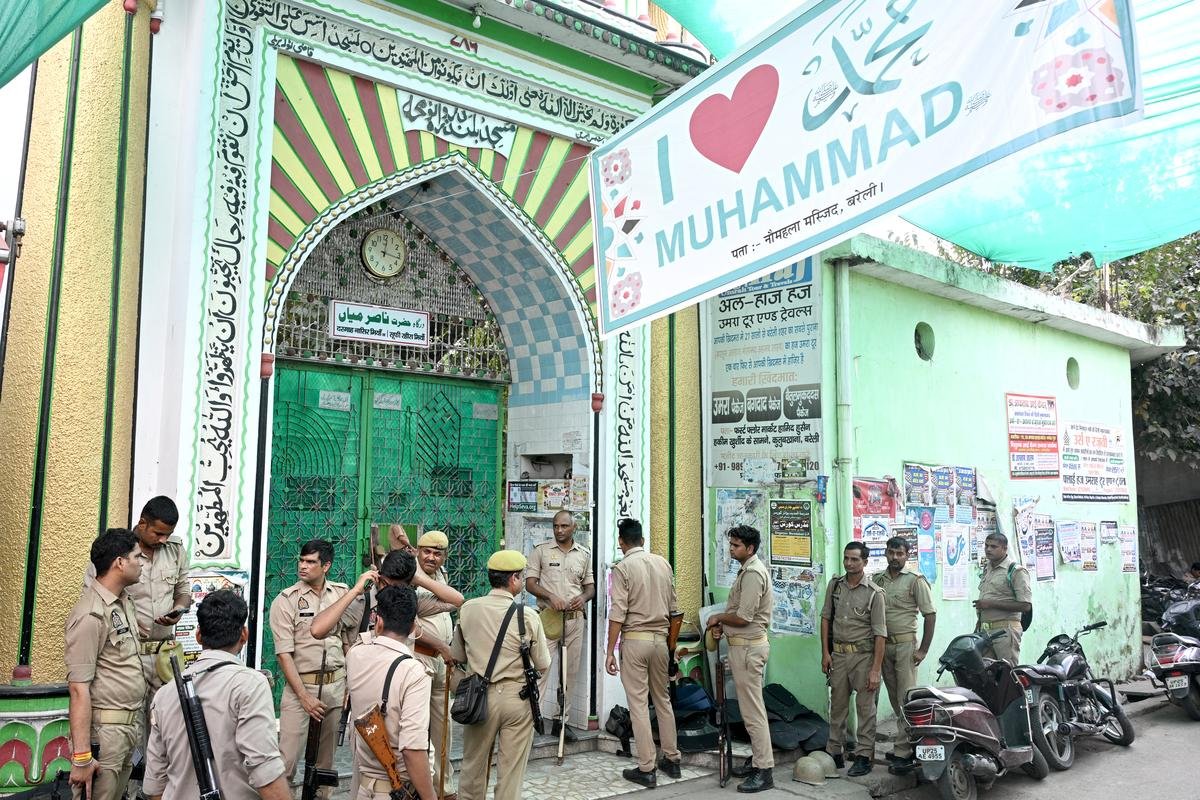

Across several BJP-ruled Indian states, peaceful expressions of Islamic faith—such as saying “I love Muhammad”—have led to arrests, criminal charges, and demolition of homes. Rights groups say this marks a dangerous escalation in the criminalisation of Muslim identity and religious freedom in India.
From Slogan to Crackdown: How ‘I Love Muhammad’ Sparked Police Action
The controversy began in Kanpur, Uttar Pradesh, when banners with the words “I love Muhammad” were displayed during Eid-e-Milad-un-Nabi processions. What was meant as a routine religious expression quickly turned into a political and legal flashpoint.
Authorities registered First Information Reports (FIRs) under laws including Section 153A of the Indian Penal Code, which pertains to promoting enmity between communities. Mass arrests and police raids followed, despite no recorded violence during the events.
According to the Association for Protection of Civil Rights (APCR), as of September 23, over 1,300 Muslims had been named in 21 FIRs, with 38 arrests across BJP-ruled states. In Uttarakhand, one FIR listed 401 individuals, seven of whom were arrested.
Bulldozers Used as Tools of Intimidation and Punishment
In many cases, authorities went beyond arrests. In Bareilly, Uttar Pradesh, after a protest involving the “I Love Muhammad” slogan, buildings linked to the accused—including a banquet hall—were demolished without warning. Officials claimed the properties were illegally built, but affected families say no prior notice was given, violating legal norms.
In Gujarat’s Bahiyal region, 178 structures were reportedly razed following communal tensions. Authorities labelled them “illegal”, but locals claim these were targeted actions, often carried out during late-night raids.
Legal Experts Warn of Constitutional Violations
Legal scholars argue that such demolitions and arrests violate Articles 19(1)(a) and 25 of the Indian Constitution, which protect freedom of expression and religious practice.
“It’s absurd to criminalise peaceful slogans like ‘I love Muhammad’,” said Aakar Patel of Amnesty International India. He added that such expressions don’t meet the legal threshold for incitement under Indian or international law.
Lawyer Prasouk Jain echoed this view, saying the state’s actions were disproportionate and likely unconstitutional unless tied to real threats to public order.
Shrinking Space for Muslim Identity Raises Alarm
The repeated use of bulldozers—without court orders or legal process—has earned the term “bulldozer justice”, with India’s Supreme Court previously warning against such instant demolitions.
Civil rights advocates say these incidents are part of a broader effort to suppress Muslim identity and create a climate of fear. They’ve urged the courts to step in before India’s secular principles are further eroded.
US-based journalist Bibhu Pattnaik cautioned that law enforcement must avoid disproportionate responses. “State actions should not create fear or deepen polarisation,” he said.
In today’s India, even peaceful religious slogans can lead to arrests, public shaming, or demolition—turning bulldozers into symbols of reprisal rather than justice.
