

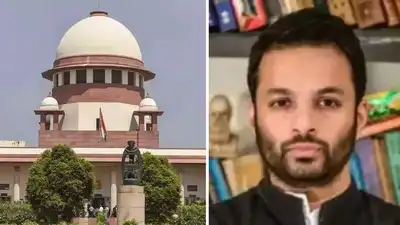

The Supreme Court of India on Wednesday granted interim bail to Professor Ali Khan Mahmudabad, a political scientist at Ashoka University, who was arrested by Haryana Police over controversial social media posts related to Operation Sindoor.
Professor Mahmudabad’s arrest on May 18 sparked widespread concern among academics, civil rights advocates, and free speech defenders across the country.
A bench comprising Justice Surya Kant and Justice N.K. Singh directed the formation of a Special Investigation Team (SIT) to examine the context and intent behind Mahmudabad’s posts. The SIT must be constituted within 24 hours by the Haryana Director General of Police and include senior IPS officers from outside Haryana and Delhi, with at least one woman officer.
While allowing interim bail, the Court imposed several conditions:
- Mahmudabad is barred from making public statements, publishing articles, or posting online content related to the case or the ongoing national security situation.
- He must surrender his passport.
Representing Mahmudabad, Senior Advocate Kapil Sibal urged the Court to protect him from multiple FIRs over the same issue. Justice Kant responded, “Nothing will happen,” indicating that further legal action would not proceed without clear grounds.
However, the Court did express disapproval of the tone in some of Mahmudabad’s posts. Justice Kant described them as “dog whistling” and “potentially communal,” stressing the responsibility of public intellectuals to use language that is neutral and respectful. “Take everyone’s sentiments into account,” he advised.
Sibal countered that the posts were patriotic and lacked criminal intent, noting also that Mahmudabad’s wife is nine months pregnant, appealing for the Court’s humanitarian consideration.
The case has intensified debate around freedom of expression, academic independence, and the role of public discourse in India’s increasingly polarized political landscape.
