

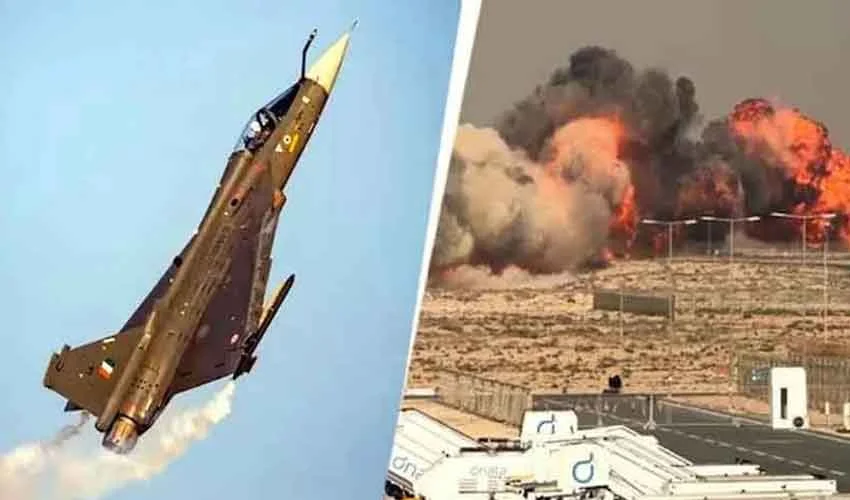

India is facing mounting international scrutiny after several Indian media outlets and commentators attributed the recent HAL Tejas crash to delayed engine supplies from the United States. Critics say the effort appears to deflect attention from domestic defence shortcomings.
Prominent Voices Link Crash to American Engine Delays
Retired officials and high-profile anchors have publicly pointed fingers at the GE-404 engine, manufactured by General Electric (GE), claiming delays in delivery contributed to the crash.
-
Arnab Goswami argued that the US “slowed down supply” of engines and suggested that Washington sees India’s LCA program as a strategic threat. He described the delay as creating a “dangerous gap in defence readiness.”
-
Retired General Bakshi echoed these claims, noting India was supposed to receive the engines two years ago, yet only two have reportedly been delivered despite a $1 billion payment for the batch. He warned that the delay could compromise responses if “Operation Sindoor 2 flares up again.”
Both commentators framed the Tejas crash as a consequence of foreign delays, linking it directly to national security concerns.
Critics Argue India is Masking Domestic Defence Weaknesses
While Indian media attempts to blame the US, analysts both inside and outside India argue the narrative is unconvincing globally. Experts say the Tejas crash highlights systemic issues in India’s defence production, including quality control failures and oversight lapses, rather than foreign interference.
Critics accuse political and media figures of using the controversy to shield local incompetence, warning that repeated attempts to externalize blame are undermining India’s strategic credibility. International observers have described publicly blaming an allied supplier as unusual and potentially damaging for defence partnerships.
Analysts note that the Tejas accident has become a symbol of accountability challenges within India’s defence ecosystem. The attempts to shift responsibility have not reduced international skepticism, and the incident continues to raise questions about the maturity and transparency of India’s defence management.
Despite the media narrative, defence experts maintain that the crash is primarily a reflection of internal weaknesses, and India’s attempt to portray the US as responsible has failed to alter global perceptions.
