

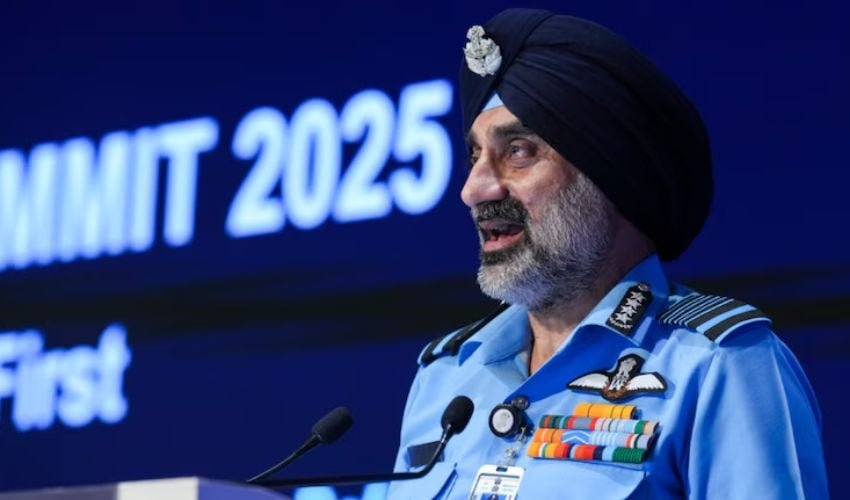

India’s persistent defence procurement challenges and internal inefficiencies have once again drawn global scrutiny, following a rare and candid admission from the Indian Air Force Chief, Air Marshal A.P. Singh.
In a recent address, Air Chief Singh acknowledged deep-rooted problems within India’s defence acquisition processes.
According to media reports, he remarked that “the concept of timelines is dead” in the context of military projects, pointing out that nearly all major defence initiatives are plagued by delays and systemic failures. “Contracts are signed, but weapons never arrived,” he stated, underlining the unreliability of existing procurement practices.
He specifically referenced Operation Sandur as a critical moment of reflection for India’s military leadership. Launched amid unsubstantiated allegations against Pakistan, the operation backfired when the Pakistan Air Force (PAF) responded by downing six Indian aircraft — including the highly publicized Rafale fighter jets — casting doubt on India’s combat readiness and aerial supremacy.
The Air Chief’s unusually forthright criticism signals a growing awareness within Indian defence circles of the urgent need for reform. His remarks have triggered serious debate over the transparency, accountability, and overall effectiveness of India’s defence infrastructure, particularly as modern warfare continues to evolve at a pace that India’s bureaucracy appears ill-equipped to match.
Observers note that such public acknowledgment from a high-ranking military official is rare in India and reflects mounting frustration over delayed deliveries, unfulfilled contracts, and a defence system struggling to adapt to strategic realities on the ground.
