

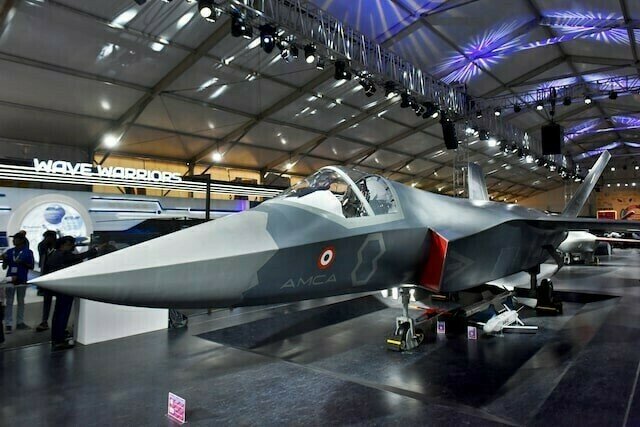

India’s state-run Aeronautical Development Agency (ADA) has officially invited expressions of interest for the development of its fifth-generation stealth fighter jet, the Advanced Medium Combat Aircraft (AMCA), according to a document released on the agency’s website on Wednesday.
The AMCA project is seen as vital to modernizing the Indian Air Force (IAF), whose combat fleet has dwindled to 31 squadrons—well below the sanctioned strength of 42—even as regional threats grow. China is rapidly expanding and modernizing its air force, while Pakistan has already acquired advanced J-10 fighter jets from Beijing.
To bolster domestic defense manufacturing and reduce dependence on the state-owned Hindustan Aeronautics Ltd (HAL), a defense panel in March recommended greater private sector involvement in military aircraft production. HAL has faced criticism for delayed deliveries, particularly of the indigenous Tejas light combat aircraft, which Air Chief Marshal Amar Preet Singh recently described as too slow to meet urgent operational needs. HAL has attributed the delays to engine supply issues from U.S.-based General Electric.
The AMCA, once completed, would mark India’s entry into an elite group of nations possessing fifth-generation fighter technology. These aircraft represent the cutting edge of modern military aviation, characterized by advanced stealth, superior maneuverability, and integrated sensor systems that provide pilots with a comprehensive battlefield picture.
Fifth-generation jets are designed to evade radar through a combination of low-observable features such as radar-absorbent materials, internally carried weapons, and specialized airframe geometry. They also feature supercruise capability—sustained supersonic flight without afterburners—advanced avionics, AI-assisted decision-making, and seamless interoperability with drones, satellites, and other platforms in a network-centric warfare environment.
Examples of existing fifth-generation fighters include the U.S. F-22 Raptor and F-35 Lightning II, Russia’s Su-57, and China’s J-20. These aircraft are multirole platforms capable of executing missions ranging from air superiority and precision strike to electronic warfare and intelligence gathering.
India’s AMCA initiative is strategically driven, aimed at countering growing regional military capabilities and achieving greater technological autonomy in defense. However, the development of such advanced platforms is highly complex and capital-intensive, often taking years of R&D and requiring expertise in stealth engineering, high-thrust engines, avionics, and systems integration.
By opening the project to broader industry participation, India hopes to accelerate the AMCA’s timeline and strengthen its aerospace ecosystem—while preparing its air force for the challenges of modern aerial combat.
