
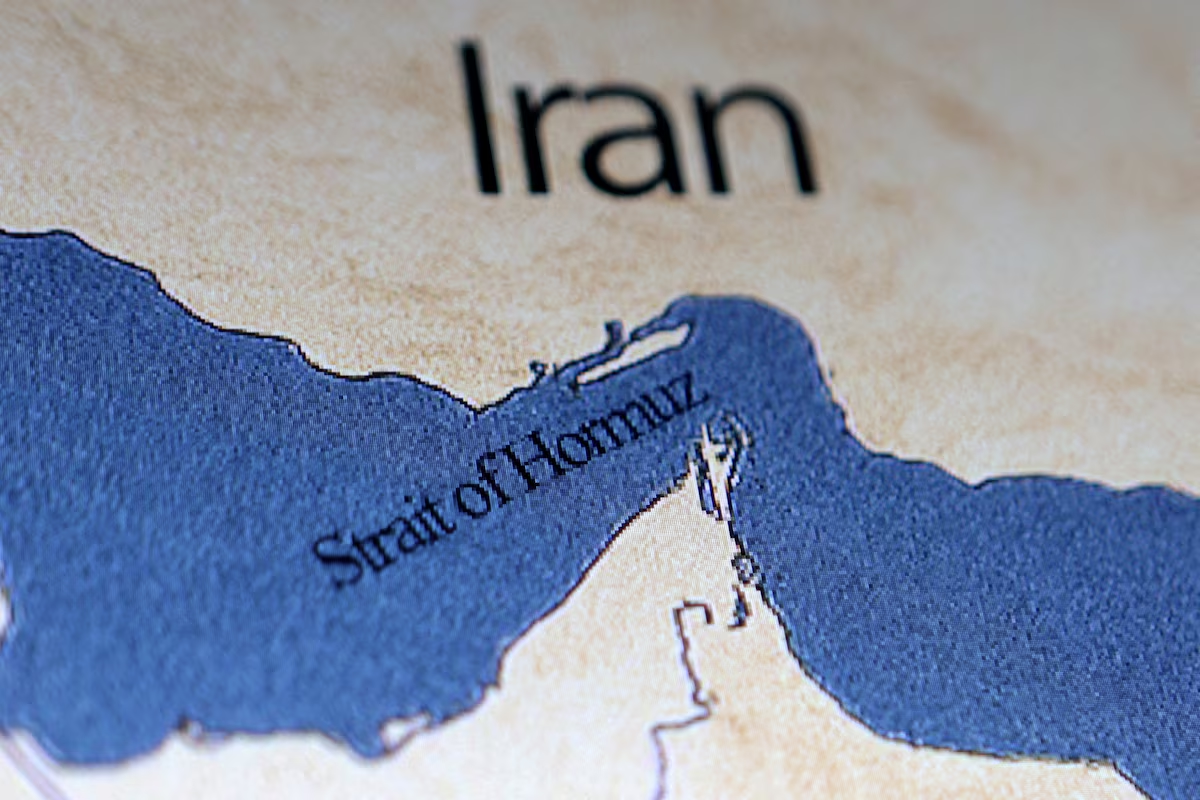

New Delhi — Conflicting accounts have emerged over whether Iran has agreed to allow India-flagged oil tankers to safely transit the Strait of Hormuz, a critical route that handles about 40 percent of India’s crude oil imports.
An Indian government source said on Thursday that Tehran had assured safe passage for Indian vessels following a telephone conversation between India’s External Affairs Minister S. Jaishankar and Iran’s Foreign Minister Seyed Abbas Araghchi earlier this week. However, an Iranian source outside the country denied that any such agreement had been reached.
Meanwhile, both India’s foreign ministry and Iran’s embassy in New Delhi have not issued official responses to requests for comment.
Uncertainty over tanker transit
According to the Indian source, two foreign-flagged tankers believed to be heading toward India recently crossed the Strait of Hormuz. The source added that Iranian authorities had conveyed assurances regarding the safety of India-flagged vessels operating in the region.
However, the situation remains unclear as instructions within Iran’s administrative system appear to pass through multiple layers. As a result, officials say the operational details of any arrangement remain uncertain.
Additionally, a statement issued after the ministers’ call blamed the United States for creating insecurity in the Persian Gulf shipping lanes. Nevertheless, the statement did not mention any specific agreement regarding safe passage for Indian ships.
India monitors sailors and regional risks
India said on Wednesday that 28 India-flagged vessels were operating near the Strait of Hormuz with 778 Indian sailors onboard. Authorities and shipping companies are coordinating with Indian embassies and local officials to ensure the safety of the crews.
Furthermore, India recently provided shelter to 183 Iranian sailors after their vessel sought refuge following the outbreak of the war involving Iran, the United States, and Israel.
Meanwhile, escalating attacks on commercial shipping have forced India, the world’s third-largest oil consumer, to explore alternative crude supplies, including increased imports from Russia.

