

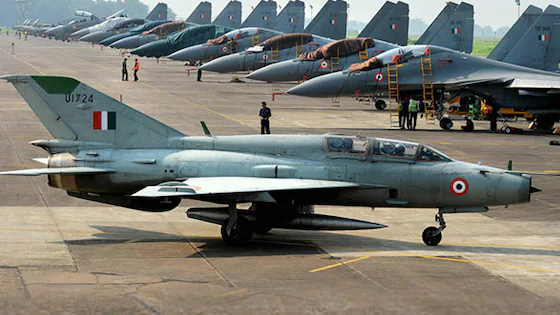

End of an Era: MiG-21 Takes Final Flight
India has officially retired its last fleet of MiG-21 fighter jets, bringing an end to a 63-year legacy marked by both military success and tragic losses.
The farewell ceremony was held on September 26 at Air Force Station Chandigarh, attended by top military brass and India’s Defence Minister. Air Chief Marshal Amar Preet Singh piloted one of the final MiG-21 flypasts, marking the end of an aircraft once considered the backbone of the Indian Air Force (IAF).
Dubbed “flying coffins” due to their alarming crash record, the MiG-21s had long outlived their expected service life. Though revered for their historic role in the 1965 and 1971 wars, the aircraft were also linked to hundreds of fatal accidents, earning them public criticism and a reputation for being unsafe.
Legacy of Glory, Loss, and Obsolescence
India was the first non-communist country to induct the Soviet-designed MiG-21 in 1963. More than 600 units were built locally by Hindustan Aeronautics Limited (HAL), forming the core of India’s fighter fleet for decades. The jets played active roles in multiple conflicts with Pakistan, but also suffered heavy losses, notably during the Kargil War in 1999 and the 2019 Balakot standoff.
Attempts to modernize the jets in the 2000s with the “Bison” upgrade brought improved radars, avionics, and weapons systems. However, the upgrades failed to resolve the aircraft’s structural age and poor safety record. Between 2000 and 2023, over 400 MiG-21s were lost, with more than 200 pilots killed.
Today, only a few countries continue to operate MiG-21s. North Korea, Angola, and Yemen maintain small fleets, but their operational status remains uncertain. In India, the aircraft’s final retirement creates a fighter jet gap for the IAF, which is already struggling with fleet shortages and delayed modernization plans.
India’s defence planners now face the urgent challenge of replacing aging jets with modern, reliable fighters like the Rafale, Tejas, and upcoming international acquisitions.
