

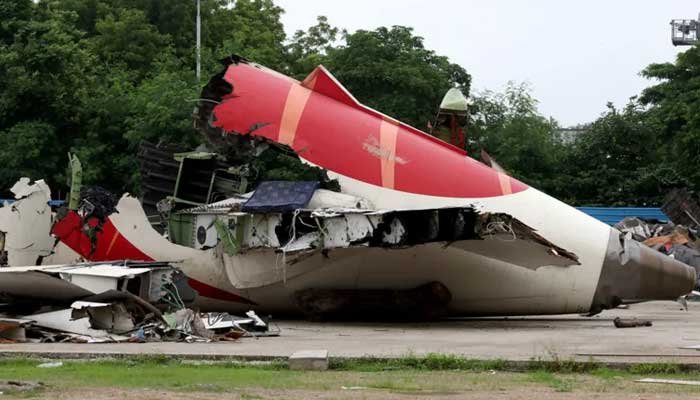

India has directed its airlines to inspect Boeing fuel switches on multiple Boeing aircraft models following last month’s Air India crash that killed 260 people, prompting renewed concerns over flight safety.
The directive was issued by the Directorate General of Civil Aviation (DGCA) on Monday, days after a preliminary investigation report from the Aircraft Accident Investigation Bureau (AAIB) revealed that fuel switches had moved from the “run” to “cutoff” position shortly after takeoff — a critical detail in the June 12 disaster.
The AAIB report did not assign fault or make final conclusions but noted that one pilot questioned the other about cutting fuel, to which the second pilot reportedly replied that he had not.
The DGCA has now ordered a mandatory inspection of the locking mechanisms on fuel control switches for Boeing 787s, 737s, and other affected models, to ensure they cannot be accidentally disengaged during flight.
This action aligns with a recent Special Airworthiness Information Bulletin (SAIB) issued by the U.S. Federal Aviation Administration (FAA), which advised airlines globally to check fuel switch locks as a precautionary measure.
“It has come to DGCA’s attention that both domestic and international operators have already begun inspecting their fleets in accordance with the SAIB,” the authority said in a statement, directing that all affected aircraft must be inspected by July 21.
Boeing Maintains Safety of Components
While Boeing has assured operators that its fuel switch locks are safe, the inspections are being carried out as an added safeguard amid mounting scrutiny following the tragic crash.
The ill-fated Boeing 787-8 Dreamliner was en route from Ahmedabad to London when it crashed shortly after takeoff, killing 241 of the 242 passengers and crew on board, along with 19 people on the ground. One passenger survived the crash.
Ongoing Investigation and Air India Response
In an internal memo on Monday, Air India CEO Campbell Wilson said that the investigation into the cause of the crash is ongoing and urged employees and the public not to draw premature conclusions.
“We must allow the investigative authorities the time and space needed to complete a thorough and factual assessment,” Wilson wrote.
As investigations continue, regulatory agencies and airlines worldwide are moving swiftly to ensure that similar fuel switch issues do not pose a risk on other Boeing aircraft in operation.
