

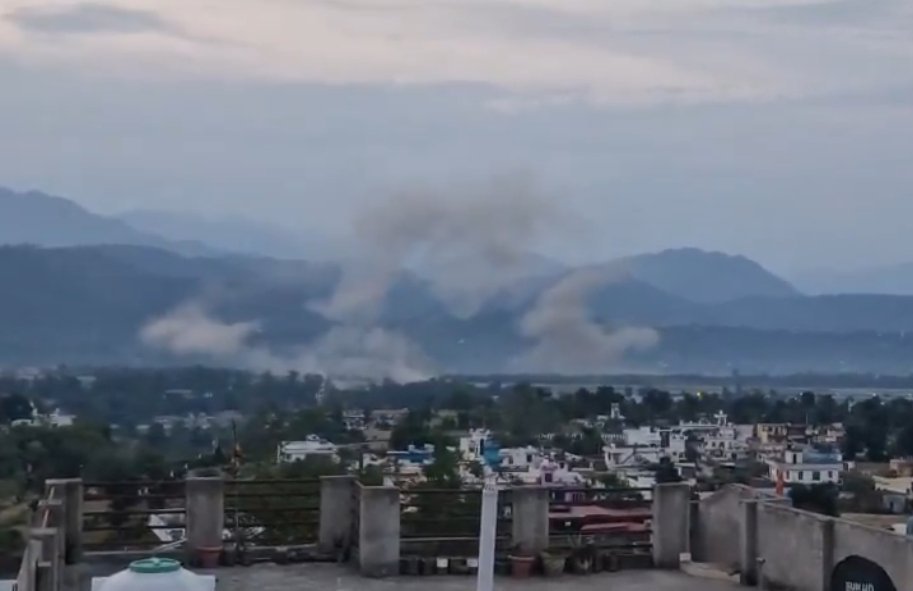

In a comprehensive analysis published Sunday, The New York Times described the recent India-Pakistan conflict—termed the “most expansive combat in half a century”—as a strategic setback for India, despite its military might and global ambitions.
The report, co-authored by correspondents Mujib Mashal and Alex Travelli, noted that the high-stakes, four-day confrontation has politically and militarily undermined India’s efforts to position itself as a rising diplomatic and economic power. Instead, the clash has “equated it once again with Pakistan, a smaller and weaker neighbor that Indian officials often label a rogue state and sponsor of terrorism.”
While Indian forces did manage to damage Pakistani air bases, the article underscores that such gains came only after India lost aircraft in aerial engagements, reflecting a less-than-decisive advantage.
“The four-day clash reminded the world about India’s powerlessness to resolve 78 years of conflict with Pakistan,” the Times stated. It warned that military escalation tends to serve Pakistan’s strategic calculus, where tensions with India are a central component of national policy and identity. Furthermore, outright victory for either side remains elusive due to the nuclear deterrent that both nations possess.
The report, based on interviews with diplomats, military analysts, and officials, stressed that the nature of Indo-Pak hostilities has become more complex over time. “The spark is now often asymmetric,” the authors noted, adding that the introduction of drones and advanced weaponry has significantly raised the stakes and the risk of rapid escalation.
Both governments, the analysis noted, have increasingly embraced religious nationalism. In India, the rise of Hindu majoritarianism under Prime Minister Narendra Modi has hardened public sentiment, making de-escalation politically difficult. The authors highlighted how Modi’s right-wing base often demands forceful retaliation, leaving the government little room for diplomatic restraint.
This marks a departure from India’s approach in 2008, when it refrained from striking Pakistan following the Mumbai terror attacks. At that time, Indian leadership chose to isolate Pakistan diplomatically rather than risk elevating it as a military equal. (Pakistan has consistently denied involvement in the 2008 attacks.)
Seventeen years later, the Times observed, India has opted for a more assertive military response, including cross-border strikes and the threat of disrupting river flows shared by the two nations—part of a broader strategy to “squeeze” its rival.
In the aftermath of the latest escalation, India has issued stronger warnings, declaring that any future terrorist attacks will be treated as acts of war. This shift signals the possibility of frequent military standoffs becoming the new normal in South Asia.
Ultimately, the New York Times concluded, India’s growing inclination toward militarized responses risks stalling its global rise. “Beyond satisfying immediate political needs,” the report cautioned, “continued confrontation could undercut India’s long-term aspirations.”
