

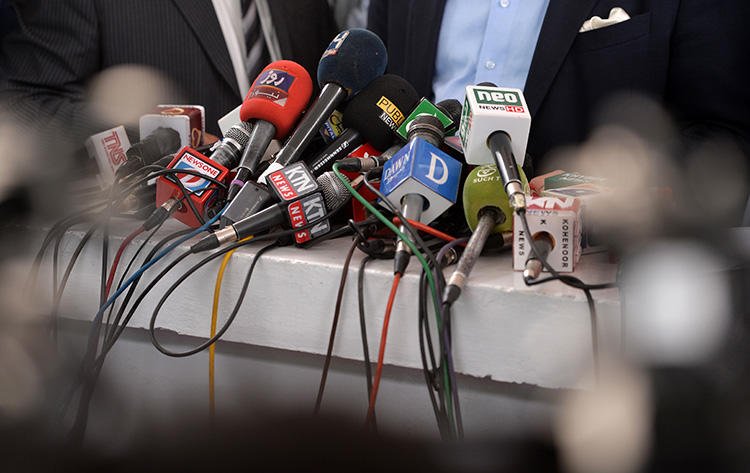

Pakistani YouTube Channels
India has recently taken the controversial step of banning 16 Pakistani YouTube channels, including major news outlets and popular content creators, accusing them of spreading provocative and false content that undermines its national security.
Among those affected is renowned former cricketer Shoaib Akhtar, whose personal channel, with over 3.5 million subscribers, was blocked. Other prominent channels such as Dawn News, Samaa TV, ARY News, Geo News, Bol News, and Raftar have also been targeted, with an estimated 63 million subscribers across India impacted by the ban.
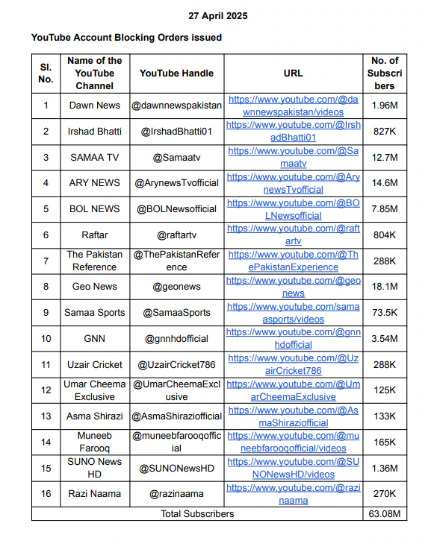
This move follows the tragic Pahalgam terror attack on April 22, 2025, in Indian Illegally Occupied Jammu and Kashmir (IIOJK), in which 26 people lost their lives.
Indian authorities claimed that the blocked channels were involved in spreading “provocative” and “communal” content that incited tensions and negatively portrayed India, its army, and security agencies.
The Ministry of Home Affairs accused these channels of pushing “false narratives” aimed at destabilizing India’s image, especially concerning sensitive issues like the Kashmir conflict.
However, this drastic action has raised serious concerns over censorship and press freedom. Many critics, including independent journalists and Pakistani media outlets such as Irshad Bhatti, Asma Shirazi, Umar Cheema, and Muneeb Farooq, have condemned India’s decision.
They argue that the ban is a blatant attempt to suppress dissenting viewpoints, particularly those challenging India’s official narrative on Kashmir and its policies in the region. These banned channels were often seen as crucial platforms for offering alternative perspectives, especially in the context of ongoing tensions between India and Pakistan.
For many Pakistani viewers, these channels provided access to information that wasn’t readily available through India’s largely state-controlled media. The sudden censorship has sparked outrage, particularly as the blocked platforms were seen as essential in offering news and commentary on national security issues, especially in the aftermath of the Pahalgam attack.
The move has been interpreted by many in Pakistan as an effort to silence their voices and limit access to critical viewpoints on matters such as the Kashmir conflict.
The Indian government’s actions come at a time of heightened tensions between the two nuclear-armed neighbors, especially regarding the disputed Kashmir region. Pakistan has long accused India of human rights violations and atrocities in Kashmir, and the Pahalgam attack only intensified the debate over the rise of extremism in Indian-administered Kashmir.
Critics argue that India’s justification for banning these channels, which centers on the claims of false narratives and violence incitement, is more about controlling the flow of information than addressing any legitimate security concerns.
Additionally, India’s response to international media, such as its demand that the BBC avoid using the term “militants” when reporting on the Pahalgam attack, underscores its aggressive stance toward foreign media that challenges its version of events. This growing trend of censorship has drawn international concern, with Pakistan continuing to highlight the importance of media freedom in the face of rising censorship, particularly in India.
As digital platforms play an increasingly significant role in global communication, such heavy-handed measures to control media content threaten the principles of free speech and hinder the exchange of diverse perspectives.
