

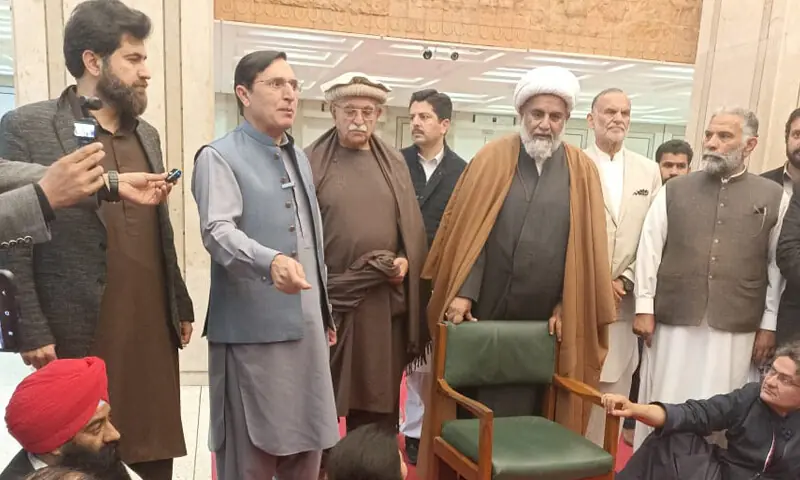

Lawmakers from Pakistan Tehreek-e-Insaf (PTI) and the opposition alliance Tehreek Tahaffuz-e-Aiyeen Pakistan (TTAP) continued their sit-in at Parliament House . They staged the protest to highlight concerns over former Prime Minister Imran Khan’s health, focusing on his deteriorating vision in the right eye.
The lawmakers also gathered at Khyber Pakhtunkhwa House and the Parliament Lodges. National Assembly Opposition Leader Mehmood Khan Achakzai, Senate Opposition Leader Allam Raja Nasir Abbas, KP Chief Minister Sohail Afridi, and former CM Ali Amin Gandapur joined the protest alongside other opposition leaders. Together, they demanded immediate medical attention and the presence of Imran’s family and personal physician.
PTI and allied lawmakers accused authorities of neglecting Imran’s eye condition. They stressed that his two-year imprisonment and worsening vision had become a major flashpoint between PTI and the government.
Supreme Court Orders Specialist Treatment
PTI counsel Salman Safdar, appointed by the Supreme Court as amicus curiae, visited Imran at Rawalpindi’s Adiala jail. He submitted a seven-page report to the apex court detailing Imran’s living conditions. The report revealed that Imran complained of having only 15% vision in his right eye.
The Supreme Court ordered authorities to provide Imran access to specialist eye doctors. It also directed a formal medical examination to be completed before February 16. Furthermore, the court allowed him to make phone calls to his sons, Kasim and Sulaiman Khan. These measures aimed to ensure his wellbeing.
Medical Updates and Diagnosis
Last month, Imran underwent a procedure at the Pakistan Institute of Medical Sciences (Pims). Doctors diagnosed him with central retinal vein occlusion (CRVO), a serious condition that affects vision. Experts noted that CRVO often links to cardiovascular risks such as high blood pressure, diabetes, high cholesterol, and heart disease.
Pims Executive Director Dr Rana Imran Sikandar said the procedure took place in a sterile operating theatre under strict monitoring. It lasted about 20 minutes and doctors successfully completed it. Senior medical staff evaluated Imran before discharging him, confirming his condition and the treatment’s success.
Government and Opposition at Odds
NA Opposition Leader Achakzai said the sit-in would continue until authorities transferred Imran to Shifa International Hospital. He emphasized that the protest would remain peaceful. However, he warned it could last through Ramadan if proper medical arrangements were not made.
Meanwhile, Imran’s sister, Aleema Khan, reported that his vision had blurred over the past three months. She questioned why authorities denied the presence of his personal physician and family during hospital treatment.
The government, however, maintained that it had provided timely medical care. Prime Minister’s Adviser on Political Affairs Rana Sanaullah said Imran first raised complaints about his eye in January. He added that jail doctors examined him every second day and administered necessary treatments. External doctors evaluated him 25 times to monitor his condition.
The ongoing sit-in underscores both political and humanitarian concerns surrounding Imran Khan’s medical care. It also reflects rising demands from opposition lawmakers for transparency, prompt treatment, and active involvement of his family in the process
