

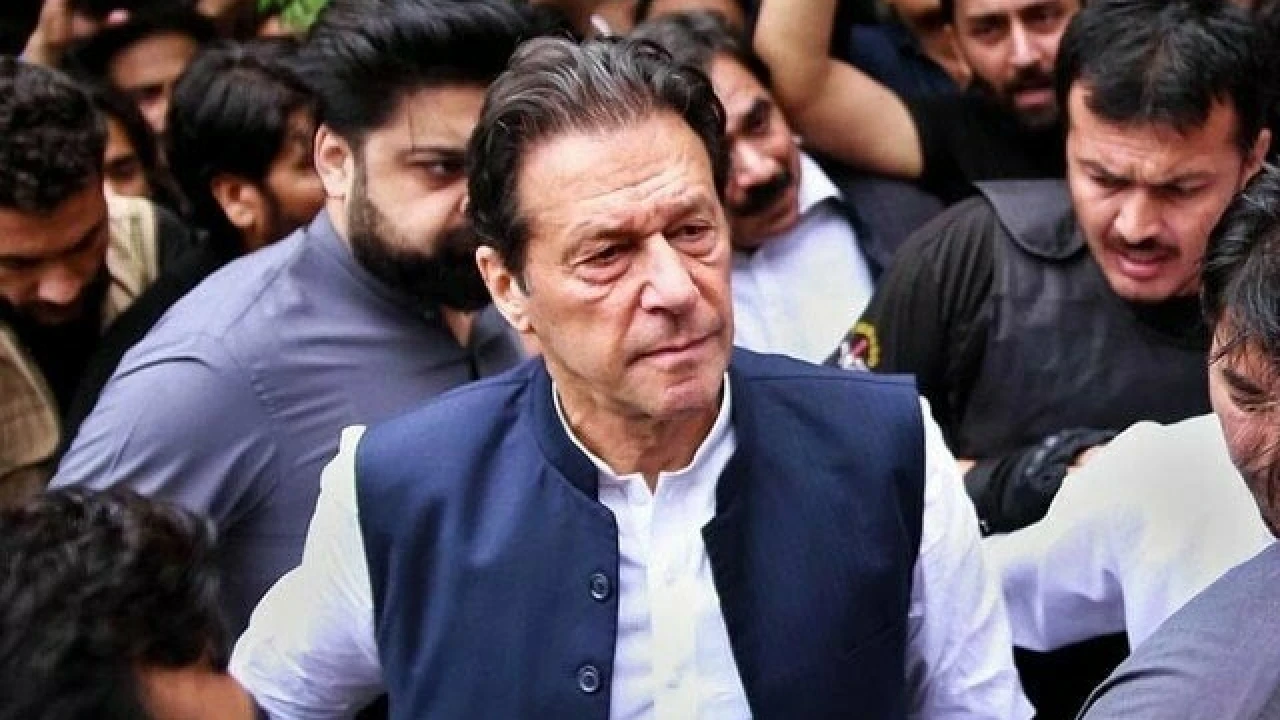

In a recent press briefing from Adiala Jail in Rawalpindi, Imran Khan, the founder of Pakistan Tehreek-e-Insaf (PTI), expressed a readiness to engage in dialogue with the Pakistan Army, provided that a representative is appointed by the military.
Khan emphasized that his previous criticisms of the army were intended as democratic critique rather than accusations, underscoring the importance of scrutiny in a democratic society.
Imran Khan, speaking to journalists, compared the army to a “misbehaving child” and argued that constructive criticism is crucial for institutional improvement.
He insisted that his critiques were meant to provide opinions rather than direct accusations, and rejected the idea that his comments undermined the army’s integrity.
He also addressed historical grievances, noting that General Zia ul-Haq was responsible for the execution of Zulfikar Ali Bhutto, and General Yahya Khan was accountable for the fall of Dhaka.
Khan questioned whether criticism should be silenced when the army engages in oppressive actions.
On the topic of political negotiations, Khan expressed doubts about the legitimacy of representatives from the “Establishment,” including Mohsin Naqvi and the Special Investment Facilitation Council (SIFC).
He accused Naqvi of orchestrating the mistreatment of PTI members and alleged that Naqvi was involved in the death of a “shadowy figure.” Khan firmly stated that he would not engage in talks with Naqvi, accusing him of enabling undue harm.
Khan noted that he had previously given Mahmoud Khan Achakzai a mandate for negotiations but is open to discussions if the army designates a representative.
He also suggested that an undeclared martial law is currently in place, with Naqvi acting as its representative.
