


IMF Talks
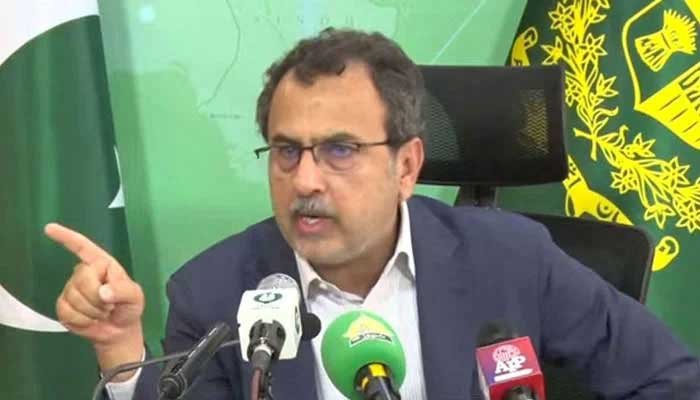
ISLAMABAD: Federal Minister for Energy (Power Division) Awais Leghari announced ongoing discussions with the International Monetary Fund (IMF) regarding captive power plants, expressing optimism about the potential to reduce electricity rates by Rs10-12 per unit.
Speaking at a session of the National Assembly’s Standing Committee on Energy, Leghari indicated that the matter was close to resolution.
The minister outlined plans to review eight bagasse-based power plants and an additional 16 plants, which would pave the way for assessing the return on equity for government-owned power plants.
He confidently stated, “By the end of this month, the issue of captive power plants will be resolved,” adding that domestic electricity prices had already been reduced by Rs4 per unit.
Leghari revealed his broader ambition to lower electricity rates by Rs50 per unit but acknowledged the complexities involved in achieving this target.
Addressing concerns about K-Electric, he criticized the utility’s demand for Rs500 billion in profits over the next 5-7 years, describing it as unreasonable and detrimental to consumers in regions such as Khyber Pakhtunkhwa.
These developments align with the government’s efforts, under Prime Minister Shehbaz Sharif’s leadership, to bring down the country’s high electricity costs. Recent reports suggest that revising tariffs for eight bagasse-based plants could save Rs238 billion, with annual savings of Rs8.83 billion.
Additionally, terminating or renegotiating contracts with 16 Independent Power Producers (IPPs) is expected to save Rs481 billion, with these benefits being passed on to consumers.
Further reforms include agreements with RFO-based plants under “take and pay” terms and the integration of renewable energy sources such as wind and solar power, aiming to reduce tariffs by Rs12 per unit by March 2025.
At the 4th International Hydropower Conference, Leghari highlighted plans to launch a competitive electricity market by March, allowing market forces to determine tariffs while the government assumes a facilitative role.
He emphasized the growing demand for solar energy solutions, with 10,000 to 12,000 MW projected to be added to the system under net metering.
The government has also saved Rs1.1 trillion through negotiations with IPPs and has made significant strides in restructuring the energy sector.
Leghari noted that distribution companies’ losses had decreased from Rs223 billion in 2023 to Rs170 billion in 2024. Furthermore, eight out of 10 Boards of Directors for Power Distribution Companies (DISCOs) have been revamped without political interference.
In his concluding remarks, Leghari stressed the importance of sustainable reforms, including restructuring the National Transmission and Despatch Company (NTDC) and reviewing taxes on electricity bills to provide relief to consumers.
While acknowledging the challenges of uniform tariffs across the country, he reiterated the government’s commitment to revamping the power sector and ensuring fairness for all regions.
