

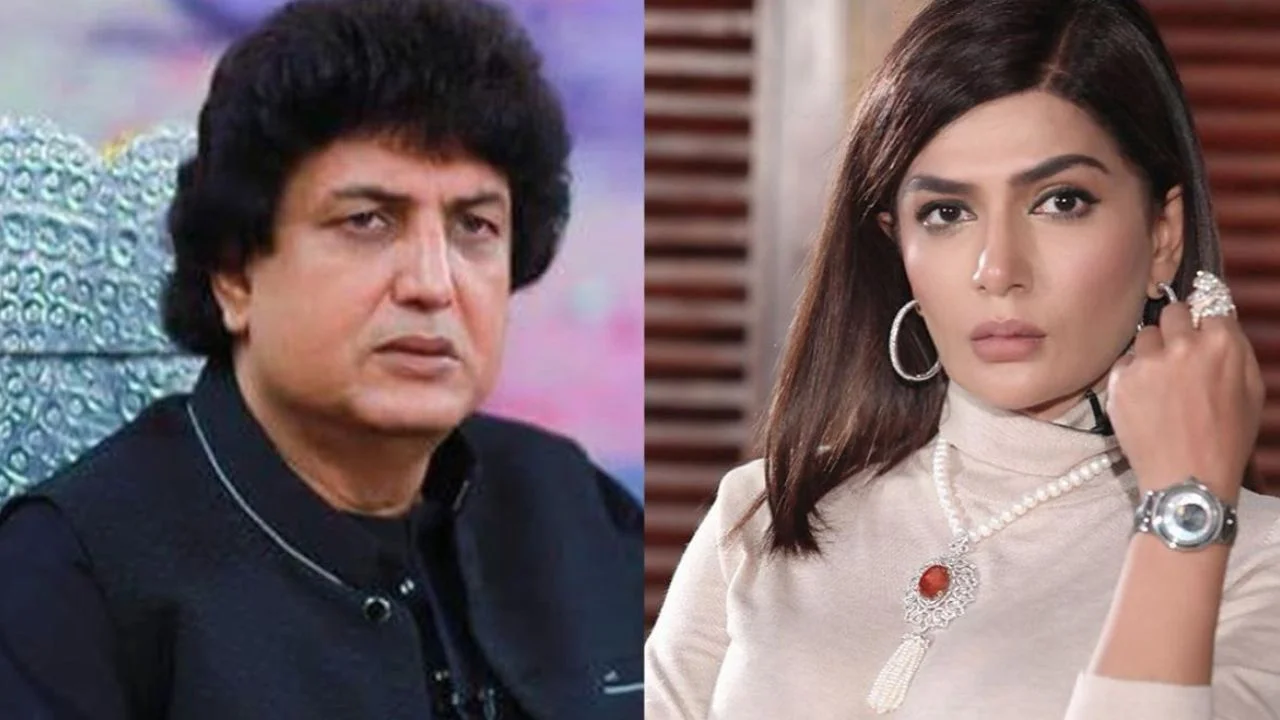

Ifat Umar
In an unexpected development, actress and well-known critic Ifat Umar has publicly defended the controversial playwright Khalil-ur-Rehman Qamar amid a scandal involving leaked private videos.
The situation has garnered widespread attention on social media, where Qamar has faced intense scrutiny and criticism following accusations of extortion and blackmail.
The scandal began when private videos of Qamar were leaked, leading to a flurry of online reactions and criticisms directed at the playwright.
Many commentators and social media users have expressed their disapproval, taking the opportunity to criticize Qamar’s past behavior and statements.
Despite this, Ifat Umar has chosen to take a different approach, offering support rather than joining in the condemnation.
In a thoughtful post on X (formerly known as Twitter), Umar addressed the situation indirectly, without naming Qamar explicitly.
She stated, “The people you have constantly criticized and disrespected are the only ones standing up for you now.” This remark highlights her position on the issue, drawing attention to the complexities of public support and personal differences.
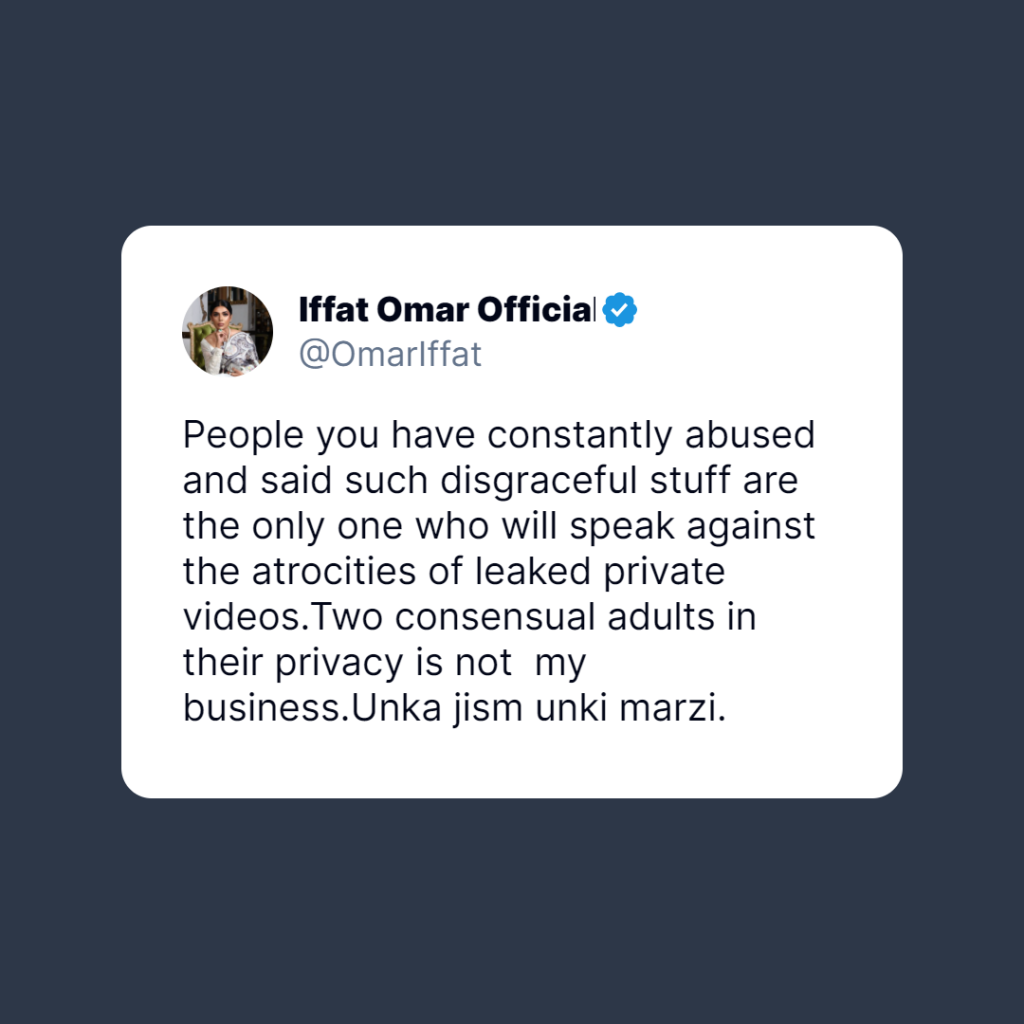
Umar’s post focused on the broader issue of privacy, an area where she has previously been vocal.
She emphasized the importance of respecting personal boundaries, asserting, “I have nothing against two consenting adults engaging in private acts. Their bodies, their choice.”
Despite her well-known feminist views and criticism of Qamar’s past misogynistic remarks, Umar drew a clear distinction between personal grievances and the right to privacy in this instance.
In a follow-up interview, Umar elaborated on her stance. She acknowledged the problematic aspects of Qamar’s past comments, particularly those involving derogatory remarks towards women.
However, she stressed that her current defense is centered around the principle of privacy rather than an endorsement of Qamar’s previous behavior.
“I have never resorted to personal attacks against him,” Umar explained. “He crossed a line when he publicly insulted a woman, something I strongly condemn. But this current situation is a matter of privacy.”
By separating her criticism of Qamar’s past actions from her support for his privacy in this particular case, Umar has sparked a broader conversation about the boundaries of public criticism and personal rights.
Her defense of Qamar underscores a nuanced perspective on how public figures are treated and the principles of personal privacy, even amidst controversy.
