


Highly Enriched Uranium
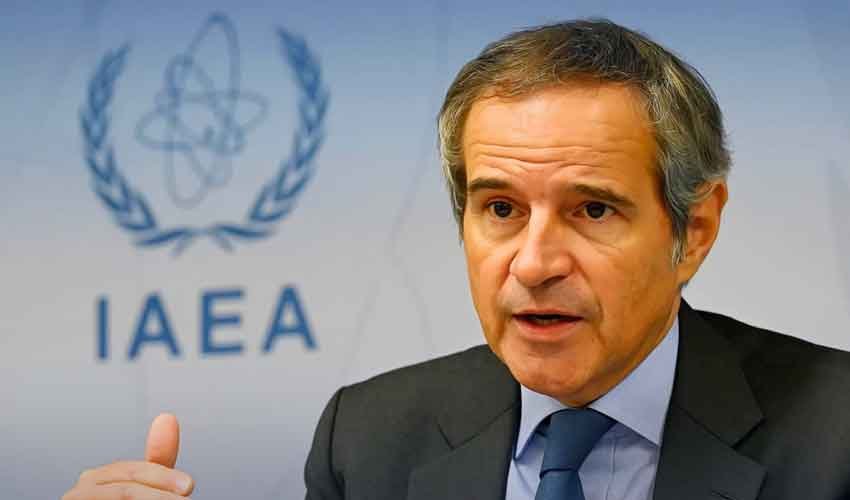
The head of the United Nations’ nuclear watchdog, Rafael Grossi, has said there is a strong possibility that much of Iran’s stockpile of highly enriched uranium survived the recent wave of Israeli and U.S. airstrikes, as Iranian authorities may have moved the material shortly after the attacks began.
Speaking at a press conference in Vienna on Wednesday alongside Austrian officials, Grossi revealed that Iran had notified the International Atomic Energy Agency (IAEA) on June 13—the very day Israeli strikes commenced—that it would be taking “special measures” to protect its nuclear material and sensitive equipment. However, Tehran did not provide specific details about the nature of these actions.
“They did not get into details as to what that meant,” Grossi explained. “But clearly, that was the implicit meaning—that Iran took precautionary steps to shield its nuclear assets. So we can imagine that this material is there,” he said, referring to enriched uranium stockpiles.
Grossi stressed that the IAEA’s top priority now is to resume on-site inspections, which have been suspended since the start of the hostilities. While agency personnel remained in Iran throughout the conflict, they have not accessed key nuclear facilities since the airstrikes began. “To confirm the status and integrity of Iran’s stockpiles and facilities, inspectors need to return,” Grossi said.
The agency estimates that Iran had over 400 kilograms of uranium enriched to 60% purity—just short of weapons-grade—prior to the attacks. According to a May 31 IAEA report, this amount of uranium, if enriched further to 90%, would be enough to produce up to nine nuclear weapons. Iran also possesses additional stockpiles at 20% and 5% enrichment levels, raising further concerns among Western powers.
Although Tehran has consistently claimed that its nuclear program is for peaceful, civilian purposes, the IAEA notes that no other non-nuclear weapon state has enriched uranium to such high levels without ultimately pursuing a weapons capability. Western nations, in particular the United States and its allies, argue that there is no civilian justification for such enrichment.
Adding to the uncertainty, the Iranian Parliament on Wednesday approved a bill to suspend cooperation with the IAEA, requiring future inspection visits to be approved by the Supreme National Security Council. This move further complicates the already fragile diplomatic environment. The bill must still be ratified by Iran’s unelected Guardian Council before becoming law.
In a statement earlier in the week, Grossi urged Iran to resume full cooperation with the IAEA, warning that reduced transparency would only increase international tensions and undermine efforts to resolve disputes diplomatically. “Resuming cooperation with the IAEA is key to a successful diplomatic agreement,” Grossi reiterated, adding that he had written to Iranian Foreign Minister Abbas Araghchi requesting a meeting.
Meanwhile, U.S. intelligence sources told Reuters that recent American airstrikes on Iran’s nuclear facilities likely delayed the program by only a few months. While some infrastructure was destroyed, much of it is reportedly repairable, and Iran has the technical capacity to rebuild quickly. “This hourglass approach is something I do not like,” Grossi remarked. “Iran knows how to do this work. It would take time, but not impossibly long.”
Iran’s Foreign Minister Abbas Araghchi also suggested that Tehran’s approach to the nuclear issue and the Non-Proliferation Treaty (NPT) may now shift. Though he did not clarify in what direction, any suggestion of withdrawing from the NPT has been met with strong concern by international observers.
Grossi warned that such a move would be “very regrettable” and could lead to severe global consequences. “It would isolate Iran and potentially trigger a serious erosion of the entire NPT framework,” he said. “I hope this is not the case.”
As tensions remain high following the 12-day war between Iran and Israel, the future of Iran’s nuclear program—and its relations with global powers—hangs in the balance. Grossi and the IAEA are now urging a return to diplomacy and transparency before the situation further deteriorates.
