

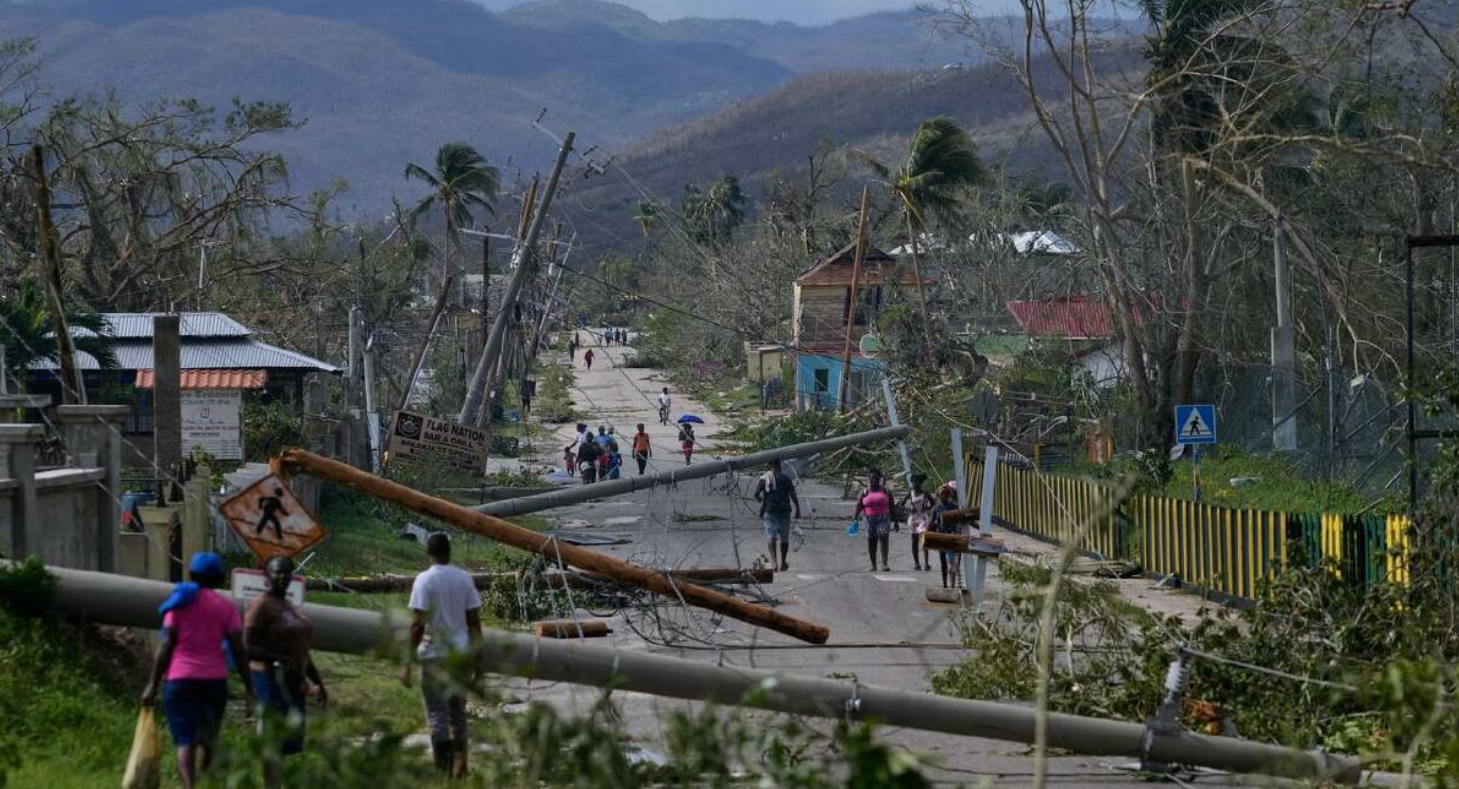

Hurricane Melissa has unleashed massive destruction across the Caribbean, leaving at least 30 people dead and thousands displaced. The storm, the most powerful hurricane of the year, brought catastrophic winds, torrential rains, and widespread flooding to Jamaica, Haiti, and Cuba.
Jamaica Faces Record-Breaking Winds
Melissa made landfall in Jamaica as the strongest hurricane in the island’s history. With winds reaching 185 mph, it struck the southwestern region, tearing off roofs, uprooting trees, and crippling infrastructure. Nearly 77% of the country lost electricity, and the agricultural hub of St. Elizabeth was among the worst-hit areas.
Local officials reported that floodwaters washed away several bodies, while thousands of residents sought refuge in emergency shelters. The Jamaican government has urged recovery efforts to begin but kept shelters open as more displaced people arrive daily.
Prime Minister Andrew Holness visited the storm-hit areas, including a hospital in St. Elizabeth that sustained major damage. Hospital staff described the terrifying experience, saying that debris and glass shattered as hurricane-force winds battered the building.
Haiti Suffers Deadly Flooding Amid Humanitarian Crisis
Although Melissa did not make direct landfall in Haiti, it brought relentless rain, leading to deadly floods and landslides. At least 25 people, including 10 children, were confirmed dead in the coastal town of Petit-Goave after a river overflowed.
Over 1,000 homes were flooded across the country. Displaced families living in temporary camps struggled without food, water, or shelter. “If the hurricane comes on top of all the problems we already have, we’ll simply die,” said one resident in Les Cayes.
The flooding has worsened Haiti’s existing humanitarian crisis. Gang violence has already forced more than 1.3 million people from their homes, leaving government and aid agencies struggling to respond.
Cuba Endures Mass Evacuations and Severe Damage
Before weakening, Melissa hit Cuba as a Category 3 hurricane with winds of up to 120 mph. It landed west of Santiago de Cuba, where more than 735,000 people were evacuated to emergency centers.
Authorities reported widespread power outages and isolated rural communities. Over 200 towns were cut off due to landslides and fallen power lines. While no fatalities were reported, officials confirmed severe damage to crops and infrastructure.
Cuba, already grappling with shortages of food, fuel, and medicine, now faces additional challenges in rebuilding. The agricultural impact is expected to affect food supplies in the coming months.
Climate Change and the Growing Threat of Superstorms
Meteorologists have ranked Melissa among the most intense hurricanes ever recorded in the Caribbean. Experts warn that rising ocean temperatures caused by greenhouse gas emissions are making such storms stronger and more frequent.
Regional leaders have urged wealthier nations to fulfill climate finance commitments. The Caribbean Community Climate Change Centre emphasized the urgent need to strengthen the global “loss and damage” fund to help developing nations recover faster.
Global Solidarity and Ongoing Rescue Efforts
The international community has pledged support for those affected by Hurricane Melissa. Aid is being mobilized in the form of food, rescue teams, and emergency supplies.
In Jamaica’s Montego Bay, floodwaters reached waist height. One resident described how rescuers broke into her home to save her and her child. “All the trees that my dad planted, all of them are gone,” she said, standing amid the ruins of her property.
As relief efforts continue, the Caribbean faces a long road to recovery. Hurricane Melissa serves as another stark reminder of the growing climate threat to vulnerable island nations.
