

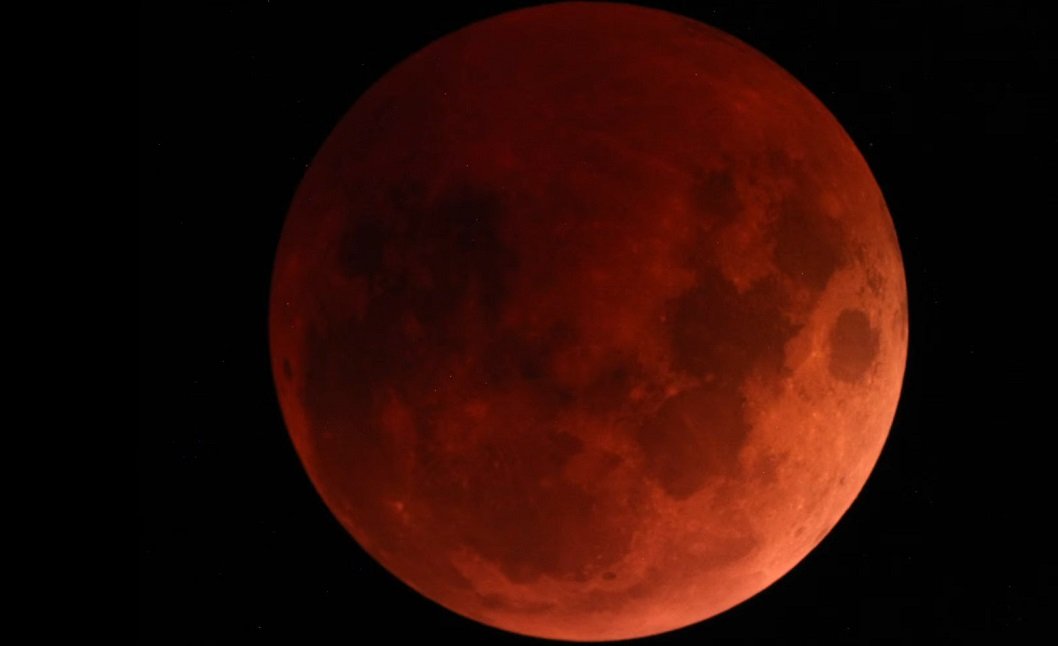

Skywatchers in Pakistan and across several parts of the world are preparing for one of the most spectacular celestial events of the decade — a rare total lunar eclipse, commonly known as a Blood Moon. On Sunday, September 7, the Moon will pass directly into Earth’s shadow, glowing a deep shade of red for several hours.
What is a Blood Moon?
A Blood Moon occurs when Earth aligns perfectly between the Sun and the Moon, casting its darkest shadow — known as the umbra — on the lunar surface. During this time, sunlight bends around Earth’s atmosphere, filtering out shorter blue wavelengths and allowing red light to pass through. This process, known as Rayleigh scattering, transforms the Moon’s surface into a dramatic red orb.
Where Will It Be Visible?
The total lunar eclipse will be best visible across most of Asia, including Pakistan, as well as Western Australia. Partial visibility will extend to Eastern Australia, New Zealand, parts of Europe, and Africa.
Eclipse Timeline in Pakistan
The event will last for more than five hours and will be fully visible across the country, including Karachi, Lahore, and Islamabad.
-
Penumbral Eclipse Begins: September 7, 8:28 p.m.
-
Partial Eclipse Begins: September 7, 9:27 p.m. (Moon begins to darken and turn reddish)
-
Total Eclipse Begins: September 7, 10:30 p.m.
-
Maximum Eclipse: September 7, 11:11 p.m. (Moon at deepest red)
-
Total Eclipse Ends: September 7, 11:52 p.m.
-
Partial Eclipse Ends: September 8, 12:56 a.m.
-
Penumbral Eclipse Ends: September 8, 1:55 a.m.
How to Watch
No special equipment is required to enjoy the Blood Moon, as the eclipse can be viewed safely with the naked eye. For the best experience, find a dark spot away from city lights to witness the Moon’s transformation in its full glory.
In Karachi, astronomy enthusiasts can join the Karachi Astronomers Society, which will host a live public viewing at the PIA Planetarium from 8 p.m. to midnight on September 7. Telescopes will be available for a closer look at the breathtaking phenomenon.
This rare Blood Moon is not only a treat for skywatchers but also a reminder of the awe-inspiring beauty of celestial mechanics.
