


A beautiful smokescreen was created in 1945: the United Nations (UN). It was heralded as an institution whose primary purpose was to prevent wars from breaking out worldwide. Undoubtedly, establishing such a body after World War II was the most sensible decision for maintaining global stability. Over the years, the UN gained more influence, and in 2015, it introduced the concept of the Sustainable Development Goals (SDGs). Heralded as “peace harbingers,” the SDGs were the logical next step in prolonging the life of our planet. These 17 goals formed a roadmap to tackle humanity’s most pressing challenges—from poverty and inequality to climate change. The target was set for 2030, but as that deadline approaches, the SDGs now seem more like a distant dream than a hopeful reality.
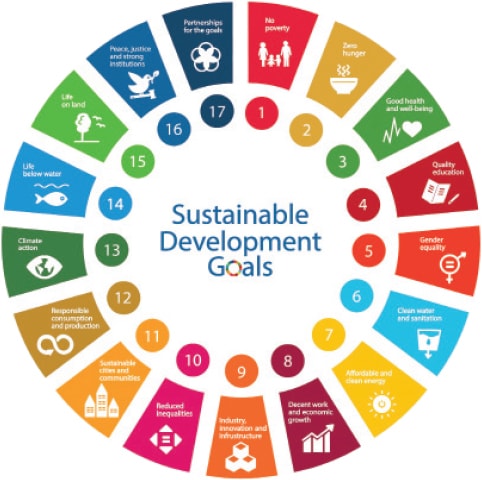
This time, however, the SDG roadmap is not being dismissed as utopian merely because it sounds unrealistic. It is being challenged in light of the unfolding tragedy in Gaza. At this moment, the SDGs are being exposed as an illusion. Netanyahu launched a brutal assault on innocent civilians—women, children, and men—and the UNO (United Nations of Ostriches) didn’t even blink. The onset of the attack on Gaza marked the collapse of SDGs 16 and 17, which uphold that peace, justice, and strong institutions are prerequisites for sustainable development. Instead, the world watched as peace was bombarded for Israel’s convenience, and justice not only delayed but—judging by current events—seems unlikely ever to be served. And where were the institutions meant to hold Israel accountable and uphold global cooperation?
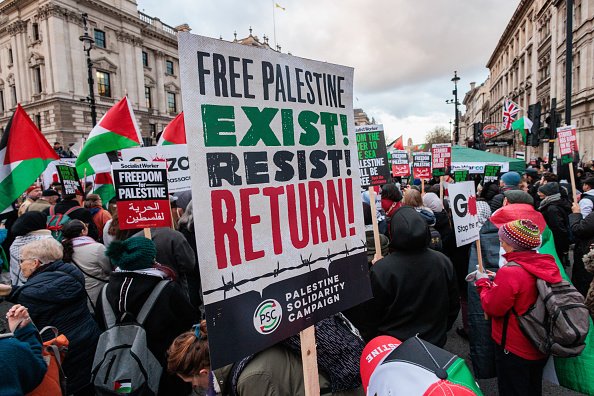
Gaza’s population of 2.3 million has shrunk by 6%—and sadly, animals might have been treated better than the people there. As if bombs alone weren’t enough to take lives, Israel also halted aid to Gaza, plunging people into acute malnutrition. According to the World Food Programme, food supply and nutrition levels have plummeted since May 2025. Data shows that one in three people (39%) go days at a time without food—meaning more than half a million Gazans are enduring acute famine conditions, a tragic failure of SDG 2. Most affected are children and women: 20% of the 55,000 pregnant women in Gaza face malnutrition—and the situation continues to deteriorate. Yet Netanyahu shamefully claimed, “There is no starvation in Gaza.”
War lays the foundation of poverty. According to UNDP, poverty rates in Gaza have soared to 74.3% since 2024—a devastating blow to SDG 1. Poverty brings food crises, health emergencies, and limited education and employment opportunities. The onset of attack inevitably triggered domino effects across SDGs. After SDG 1, it was clear that SDGs 2, 3, 4, 6, and 8 would also suffer. It’s no surprise wars create cascading failures. But why did no one anticipate it? Bombing crushes infrastructure, and what remains often operates without adequate supplies, running only on generators.
Gaza’s water crisis has worsened—residents now have access to just 3–5 liters of water per person daily, well below the UN’s minimum of 15 liters. People are forced to use unclean, contaminated, or saline water sources . Médecins Sans Frontières (MSF) and UN agencies report spikes in cholera, hepatitis A, skin infections, urinary tract infections, kidney problems, and more. Denying humanity, especially innocent civilians, basic necessities like food and water—while the world watches in silence—is a heinous act.
Mark Twain was right when he called humans “the damned human race,” for we repeatedly prove we cannot coexist peacefully. Using religion or politics as excuses, we have attacked lands and disrupted the natural order. No one stopped to consider the dreams of Gaza’s families. A war that decimated school buildings meant that in 2024, almost 100% of students in Gaza missed months of school. According to the Eastern Mediterranean Health Journal, 54% of children exhibit PTSD, 41% show signs of depression, and 34% suffer from anxiety. Emotional trauma does not spare teachers either—and as a result, education in Gaza has been set back by five years.
When food, water, and education are compromised, it doesn’t take genius to see that other SDGs suffer too. The backbone of any country—its economy (SDG 8)—is inevitably disrupted by war and siege. The UN reports youth unemployment in Gaza exceeds 60%, with overall unemployment hovering around 45%. Bombardment has destroyed offices and factories, crippling the private sector and cutting import-export capacity. Infrastructure collapse and economic isolation make it clear: Gaza’s economic recovery cannot begin until the war ends.
SDGs 11 and 13 emphasize the importance of climate, land, and water preservation. But what about Gaza? Did life not exist there—or were Gazans deemed less-than-human? The bombardment surely harmed the climate—both visible and invisible. Gaza, once one of the least polluting regions, now bears the brunt of war’s carbon footprint. By 2024, over 37,000 tonnes of rubble had accumulated—cleanup could generate up to 90,000 tonnes of greenhouse gases, depending on the method used . The Wadi Gaza wetlands—vital for migratory birds and local biodiversity—have been severely damaged, with losses of 20–25%. The UN Environment Programme warns that bomb residue and toxins are seeping into groundwater and soil. Wars spare no ecosystem: land, air, or water. SDG-governing bodies know this—but do they care?
The atrocities continue, and while the SDGs might fade into irrelevance in Gaza, the holocaust unfolding under Netanyahu’s orders continues. I am reminded of Allama Iqbal’s Persian poem Pas Che Bayad Kard, Aqwam-e-Sharq (“What Now Should Be Done, O People of the East”), in which he condemned the League of Nations:
Life is a constant struggle.
The example of Abyssinia should teach us a lesson.
With no discussion or debate, Europe’s law
Has permitted wolves to devour lambs.
We need to design a new world order.
No hope is possible from coffin thieves.
What is in Geneva other than cunning and deceit?
It is a system of agreed-upon hunting territories.
Iqbal called League representatives “coffin thieves,” condemning a system in which powerful nations—the wolves—devour weaker ones. The UN, under the guise of diplomacy, operates similarly today. Since October 2023, the UN Security Council has used its veto power to block ceasefire resolutions four times. Like in the Syrian civil war—where Russia’s veto prolonged suffering rather than end it—the veto power serves aggressors, not justice.
We cannot afford to ignore children’s cries—afraid to watch the sun rise without the roar of aircraft overhead—while such world saviors sit on fragile chairs, blind to women’s grief. How long will these atrocities persist as the world grows numb? History shows: when elites grow indifferent, revolution rises—France’s poor against aristocrats, the subcontinent against British rule. Nature demands that oppressors pay. It is inevitable, for nature is just.
As for Gaza, your mothers birthed brave children who have endured horrors beyond words. Words alone cannot do justice to their suffering. It is high time the world wakes up. Actions, not rhetoric, are vital in front of self-styled saviours who in truth are the destroyers.
