

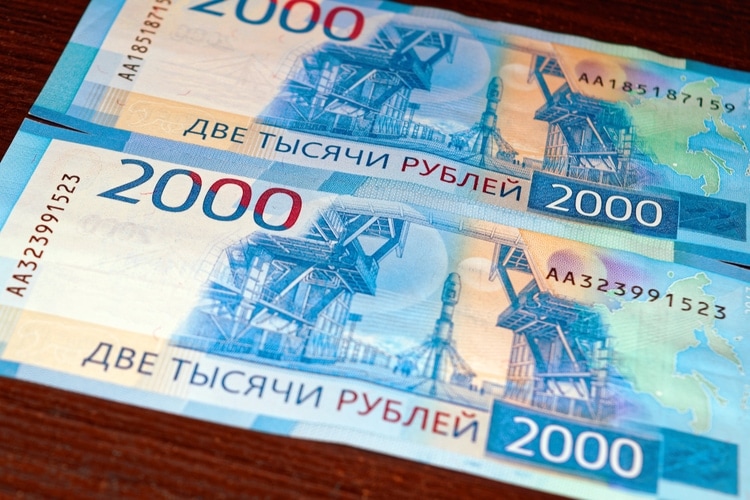

The Russian ruble has plunged to its lowest levels against the U.S. dollar since the invasion of Ukraine, while also weakening against the Chinese yuan.
Analysts believe Moscow may manage to halt the ruble’s steep decline, which has been driven by intensifying sanctions, but predict the currency will continue to lose value gradually in 2025.
What happened?
On Wednesday, the Russian ruble fell to its weakest point since March 2022, surpassing 113 rubles per U.S. dollar in Forex trading.
In response to U.S. sanctions, Russia stopped trading dollars and euros on its primary financial platform, the Moscow Exchange (MOEX), in June. As a result, the ruble is primarily traded in Forex markets among international players with minimal Russian corporate involvement. Some experts argue that these markets don’t fully reflect the ruble’s actual strength.
Nevertheless, the ruble’s devaluation is evident across various platforms, not just in Forex markets.
Within Russia, rubles are exchanged for dollars and euros through banks or currency exchange offices, with the Central Bank determining the official ruble exchange rate based on domestic transactions. Reports indicate that cash dollars are available at Moscow currency exchange offices at a slight premium to the official rate.
On Thursday, the Central Bank’s official ruble-dollar exchange rate climbed to 108, a 3% increase from the previous day.
Against the Chinese yuan, which remains traded on the Moscow Exchange, the ruble also weakened, crossing 15 rubles per yuan on Wednesday for the first time since March 2022.
“The ruble market is fragmented and illiquid,” economist Sofia Donets explained. “For now, the yuan exchange rate offers the most reliable benchmark. Based on the cross rate of the yuan to the dollar, the ruble’s imputed rate is closer to 108, but the rapid weakening of the ruble is undeniable.”
Why did the rubble fall?
Several factors contributed to the ruble’s sudden decline, including Western sanctions and seasonal trends, which increased demand for foreign currency while Russian exporters sold insufficient amounts to balance the market.
New U.S. sanctions, introduced on Nov. 21, target Gazprombank, a major Russian bank previously exempt from sanctions and critical to Moscow’s energy trade.
Gazprombank has not only facilitated Gazprom’s gas exports but also supported Russia’s broader foreign trade, according to Sergei Vakulenko, a senior fellow at the Carnegie Russia Eurasia Center.
These sanctions also jeopardize Russia’s foreign currency earnings, noted Maximilian Hess, founder of Enmetena Advisory and a fellow at the Foreign Policy Research Institute.
“Sanctions have disrupted Russia’s primary energy payment channels, including those through China, by targeting VTB Shanghai,” Hess told The Moscow Times.
The latest measures build on U.S. secondary sanctions on the Russian financial sector from December 2022.
Additionally, the potential cessation of Russian gas supplies to Europe via Ukraine next year could further unsettle financial markets, Hess added.
“In times of uncertainty and escalation, people typically shift to safe assets, such as hard currencies,” Vakulenko told Deutsche Welle. “Expectations that this might be the last chance to buy dollars and euros are driving demand.”
Seasonal factors, such as increased import demand during the holiday season, also played a role.
“There’s always a seasonal rise in import demand in the fourth quarter,” analyst Pavel Ryabov explained. “Last year, high foreign currency earnings offset this gap. This year, without that buffer, the ruble has collapsed.”
