

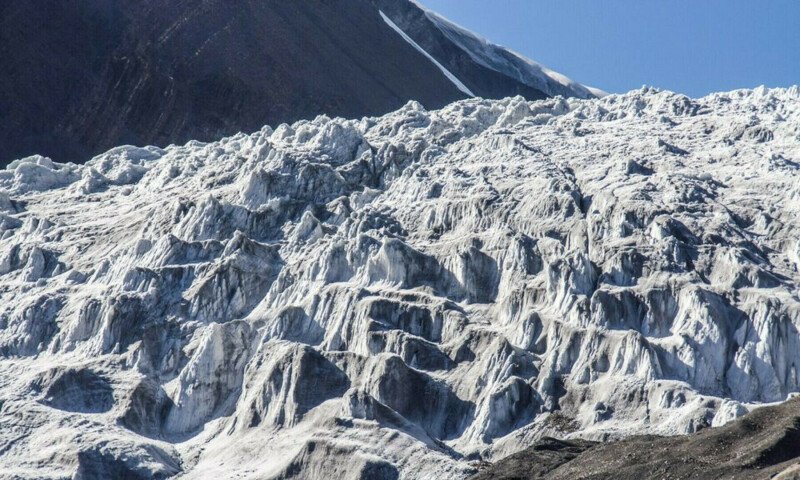

Snowfall across the Hindu Kush-Himalayan (HKH) mountain range has dropped to its lowest level in 23 years, posing a serious threat to nearly two billion individuals who rely on snowmelt for freshwater, according to a scientific report released on Monday.
Stretching from Afghanistan to Myanmar, the HKH range contains the largest concentration of ice and snow outside of the polar regions and plays a crucial role in supplying freshwater to a vast population across Asia.
According to the International Centre for Integrated Mountain Development (ICIMOD), researchers observed a “significant decline in seasonal snow” throughout the region. Snow persistence—referring to the duration snow remains on the ground—was recorded at 23.6% below average, marking the lowest level in over two decades.
“This trend, continuing for the third straight year, jeopardizes the water security of almost two billion people,” ICIMOD noted in its Snow Update Report.
The report also highlighted the likelihood of reduced river flows, a growing dependence on groundwater, and heightened risks of drought.
Sher Muhammad, lead author of the report, explained that snowfall began late this year—starting only in January—and remained below average through the winter months.
Several regional nations have already issued drought warnings, raising concerns about upcoming crop yields and water availability for communities already suffering from increasingly intense and frequent heatwaves.
ICIMOD, an intergovernmental body composed of Afghanistan, Bangladesh, Bhutan, China, India, Myanmar, Nepal, and Pakistan, called for urgent and collaborative action. It recommended improved water management, enhanced drought preparedness, more effective early warning systems, and strengthened regional cooperation.
The report pointed out that snow cover in the Mekong and Salween basins—two of Southeast Asia’s longest rivers that support millions in China and Myanmar—has declined by nearly 50%.
ICIMOD’s Director General, Pema Gyamtsho, emphasized the need for long-term policy shifts to address recurring low snow levels. He warned that carbon emissions have already triggered a lasting pattern of abnormal snowfall in the HKH region.
Asia continues to bear the brunt of climate-induced disasters. The World Meteorological Organization recently reported that five of the past six years have seen record-breaking glacier retreat, reinforcing the urgency of climate action.
