
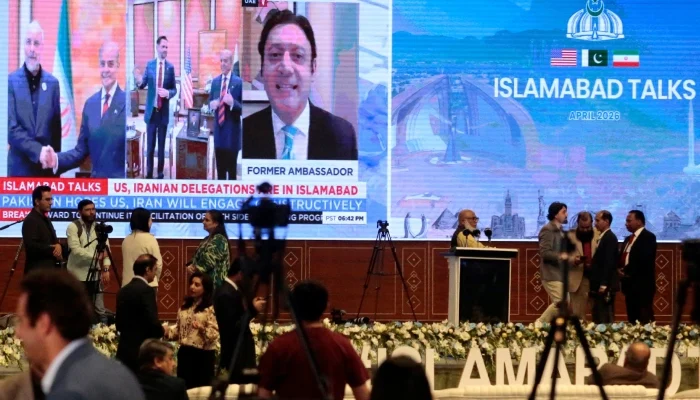

Tense negotiations between the United States and Iran ended without agreement after prolonged talks in Islamabad. The outcome has raised fresh concerns about regional stability and the future of diplomacy. Despite early optimism, both sides failed to bridge critical differences.
US Vice President JD Vance confirmed that no deal was reached after nearly 21 hours of discussions. He stressed that Iran did not accept key US demands, particularly on nuclear assurances. His statement contradicted earlier signals suggesting talks might continue.
Iran, however, maintained a more measured tone. Officials said discussions had concluded but insisted that engagement would go on. Technical teams are expected to exchange documents in the next phase.
Talks Stall Despite Early Momentum
The negotiations brought together senior officials from both countries under Pakistan’s mediation. The US delegation included Steve Witkoff and Jared Kushner. They met with Iranian leaders, including Mohammad Bagher Ghalibaf and Abbas Araghchi.
Initial meetings showed signs of progress. Both sides entered a technical phase involving written proposals. Iranian officials even suggested that talks could resume after a short break.
Pakistan played a central role in hosting and facilitating the dialogue. Prime Minister Shehbaz Sharif expressed hope that the discussions would lead to lasting peace. He reiterated Islamabad’s commitment to mediation.
However, optimism faded as disagreements persisted. The US departure marked a major setback. It ended hopes of a quick diplomatic breakthrough.
Deep Divisions Over Nuclear and Regional Issues
At the heart of the dispute lies Iran’s nuclear programme. Washington is demanding strict guarantees that Tehran will not develop nuclear weapons. It also seeks limits on uranium enrichment and stronger international monitoring.
Iran has rejected these demands. It insists on its right to pursue peaceful nuclear activities. Tehran views enrichment as a matter of sovereignty.
Sanctions remain another major sticking point. Iran is calling for the immediate removal of all economic restrictions. It also wants access to frozen financial assets. The US prefers a phased approach linked to compliance.
Control of the Strait of Hormuz is also under debate. Iran seeks greater authority over the strategic waterway. The US insists on unrestricted global access to ensure energy security.
Regional tensions further complicate the talks. Washington wants Iran to scale back support for allied groups. Iran, in turn, demands an end to military actions against those groups and a reduction in US presence in the region.
Mediation Efforts Continue Amid Uncertainty
Pakistan’s leadership remains engaged despite the setback. Officials say complex conflicts cannot be resolved in a single round of talks. The decades-long tensions between Washington and Tehran continue to hinder progress.
The negotiations followed a fragile ceasefire announced earlier this month. The truce had briefly reduced hostilities after weeks of conflict. Still, underlying issues remain unresolved.
Both sides have presented competing frameworks. The US proposed a 15-point plan. Iran countered with a 10-point proposal. The gap between the two remains wide.
Diplomatic sources say further talks are possible. However, no timeline has been confirmed. The lack of immediate progress highlights the difficulty of reaching consensus on critical security issues.
For now, the region watches closely. The failure to secure a deal underscores the fragile nature of peace efforts and the risks of renewed escalation.

