

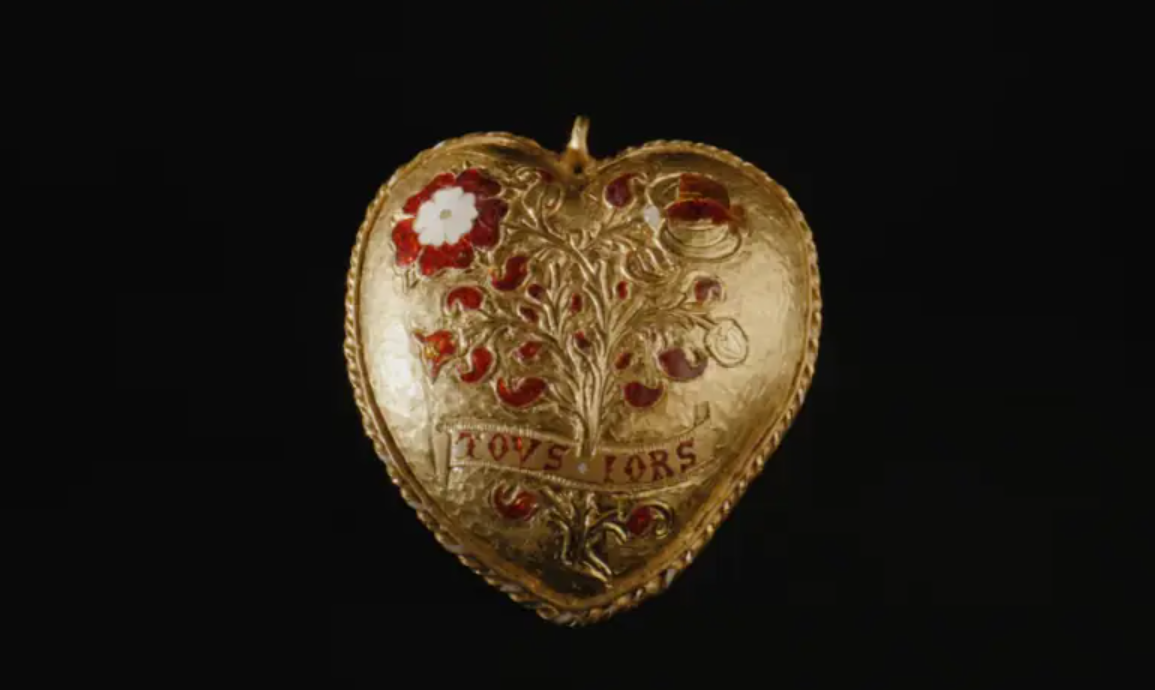

A rare gold heart pendant linked to King Henry VIII and Katherine of Aragon has been saved from private sale. The historic jewel will now be permanently displayed at the British Museum.
The pendant, made from 24-carat gold, carries deep symbolic value. It features the initials of Henry VIII and Katherine of Aragon in red enamel. It also includes the Tudor rose and a pomegranate tree.
Although their marriage ended in divorce in 1533, the pendant survived centuries of obscurity. It remained lost for hundreds of years before resurfacing in modern times.
In 2019, a metal detectorist discovered the pendant in a field in Warwickshire. The find immediately attracted national attention due to its historical importance.
Under British treasure laws, significant discoveries must be offered to museums first. This process allows public institutions to preserve important heritage items.
To secure the pendant, the British Museum raised £3.5 million. The funding prevented the jewel from being sold to a private collector.
Public support played a key role in the effort. Around 45,000 people donated a combined £380,000 toward the purchase.
Additional funding came from heritage trusts, including the National Heritage Memorial Fund. Together, these contributions reached the required amount.
According to regulations, the proceeds will be divided evenly. Half will go to the detectorist, while the other half will go to the landowner.
Experts believe the pendant was created in 1518. It likely marked the betrothal of Princess Mary to the French heir.
The heart includes a banner reading “tousiors,” meaning “always” in old French. This detail reflects the devotion once associated with the royal marriage.
Importantly, this pendant is the only surviving piece of jewellery from Henry’s 24-year marriage to Katherine. No other known items from their union remain.
However, the marriage later collapsed. By the early 1530s, Henry sought a male heir and fell in love with Anne Boleyn.
His desire for annulment led to a historic break from the Catholic Church. This decision reshaped England’s religious and political landscape.
Today, the pendant offers rare insight into that earlier chapter. It reveals a personal side of a marriage that changed English history.
The British Museum plans to place the jewel on permanent public display. As a result, visitors can now view a tangible symbol of Tudor-era ambition, devotion, and conflict.
