

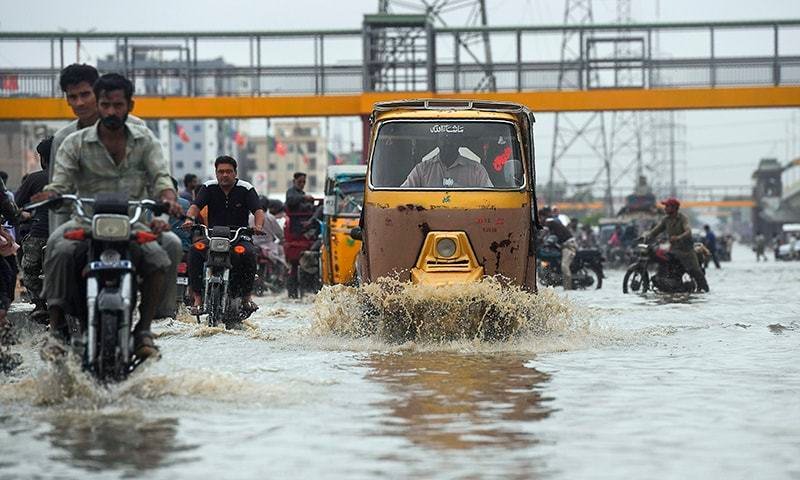

Urban Flooding Warning
The National Disaster Management Authority (NDMA) has issued a nationwide alert warning of intense monsoon activity over the next 24 to 48 hours, with a heightened risk of urban flooding, glacial lake outburst floods (GLOFs), and widespread disruption across multiple provinces in Pakistan.
According to the advisory, the heavy monsoon rains are expected to impact vast swathes of the country, with particularly severe effects anticipated in southern Sindh, northeastern Punjab, and northern mountainous regions.
The NDMA has placed key urban centers on high alert, urging local administrations to activate emergency protocols to mitigate the potential fallout from the approaching weather system.
In Sindh, the coastal and southern districts including Karachi, Hyderabad, Thatta, Sujawal, Badin, Umerkot, Mirpurkhas, Sukkur, Larkana, Tharparkar, and Jacobabad are bracing for torrential downpours accompanied by strong winds. The NDMA warns that low-lying urban areas, particularly in Karachi and Hyderabad, face a significant risk of urban flooding, waterlogging, and possible power outages.
The warning includes the likelihood of severe water accumulation in residential and commercial neighborhoods, potentially disrupting transport, communication, and electricity supply.
Punjab is also expected to be hit hard, with cities like Lahore, Rawalpindi, Gujranwala, Gujrat, Sialkot, Faisalabad, Kasur, Sargodha, and Mandi Bahauddin likely to experience heavy rainfall and storm-related flooding. Urban flooding could severely impact densely populated areas, with the NDMA advising citizens to stay indoors and take precautionary measures during heavy rainfall periods.
In Khyber Pakhtunkhwa, districts including Peshawar, Mardan, Swat, Dir, Kohistan, Bannu, Karak, and Waziristan are forecasted to receive heavy rains and thunderstorms, which could trigger flash floods, landslides, and significant infrastructure damage. The NDMA also flagged the risk of GLOFs in northern KP regions such as Swat and Kumrat Valley, where glacial melting due to intense rainfall could cause sudden and destructive flooding.
Gilgit-Baltistan and northern Chitral are under particular threat of GLOFs. The NDMA alert highlights potential flood risk in glacier-fed areas such as Hanarchi, Tarsat, Handor, Darkot, and Ishkoman. Rising temperatures and heavy rains are accelerating glacier melt, increasing the risk of sudden breaches in glacial lakes.
In Azad Jammu and Kashmir (AJK), heavy rainfall could lead to flash floods in vulnerable areas including Neelum Valley, Muzaffarabad, Rawalakot, Bagh, and Kotli. The mountainous terrain makes these areas particularly susceptible to flooding and landslides.
Meanwhile, Balochistan is expected to receive substantial rainfall and strong winds in cities such as Quetta, Ziarat, Khuzdar, Zhob, Sibi, Dera Bugti, and Loralai. These conditions may lead to flash floods and communication disruptions in remote regions.
The NDMA has directed all provincial and district administrations to remain on high alert, ensure the operational readiness of emergency equipment, and keep local populations informed as the monsoon system develops. Rescue agencies have also been instructed to pre-position personnel and supplies in high-risk areas.
Citizens are advised to monitor weather updates, follow guidance from local authorities, avoid unnecessary travel, and take safety precautions, particularly in flood-prone or low-lying regions.
As climate patterns continue to shift, the NDMA emphasized the importance of public awareness and coordinated preparedness to minimize loss of life and property during extreme weather events.
