

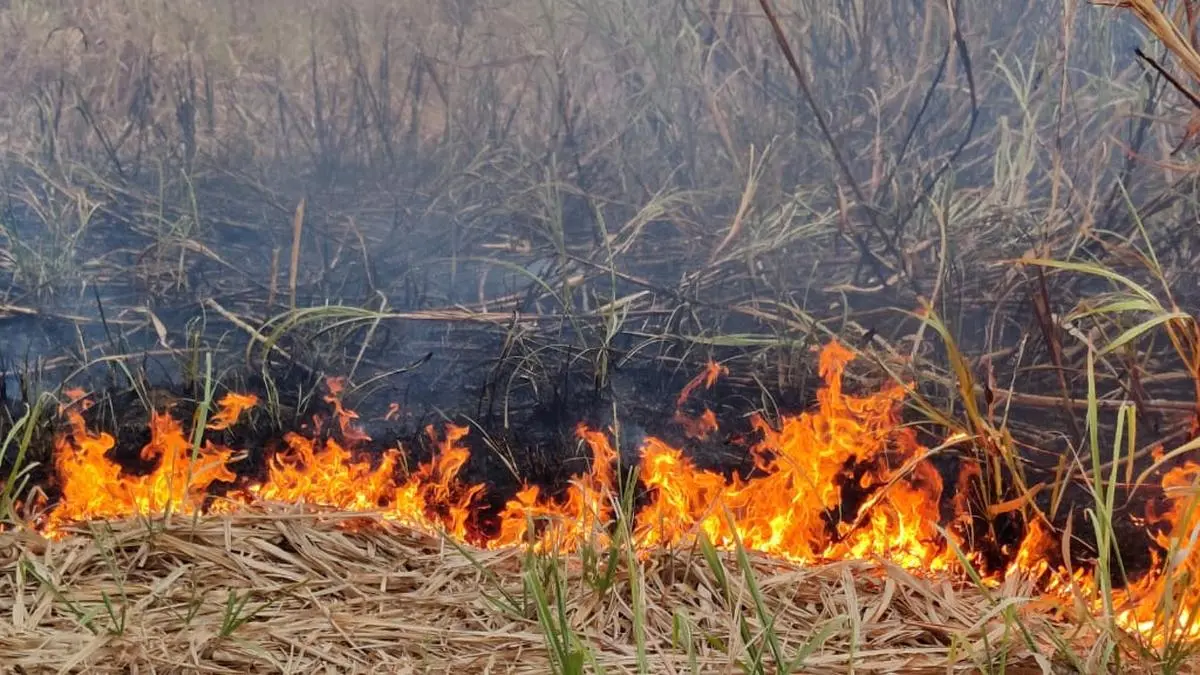

A dramatic protest unfolded in Punjab’s Sadiqabad as a distressed farmer set his entire sugarcane crop ablaze, expressing his frustration over the government’s refusal to increase sugarcane prices. The emotional act, reported on Sunday, highlighted the growing desperation among farmers struggling to survive amid soaring production costs.
Farmers Say Rising Costs Are Pushing Them to the Edge
The protesting farmer said that the skyrocketing prices of fertilizer, diesel, and other essential inputs have made it impossible to sustain farming. He declared that growers would rather burn their crops than “submit to the blackmailing of the sugar mills’ mafia.”
Farmers across the region have demanded an increase in the sugarcane purchase rate from Rs 400 to Rs 600 per maund, arguing that the current rate is far too low to cover their expenses. According to them, the widening gap between their input costs and the mills’ offered rate has pushed them into crisis.
Last year, sugar was priced at Rs 120 per kg, while sugarcane was purchased at Rs 400 per maund. This year, farmers say the price of sugar has surged to Rs 200 per kg, yet the sugarcane rate remains unchanged. The farmers lament that such a low rate cannot cover the high production cost of a crop heavily dependent on expensive fertilizer and diesel.
Sindh and Punjab Farmers Unite, Threaten Boycott
In a powerful show of unity, sugarcane farmers from Punjab and Sindh held a Jirga and collectively decided to boycott supplying sugarcane to mills until prices are increased. The gathering issued a clear warning: if the government fails to fix the per-maund rate at Rs 600, growers will refuse to harvest their crops.
“We will set our standing crops on fire but will not be blackmailed by the sugar mills mafia,” farmers declared passionately during the meeting.
The fiery protest in Sadiqabad has turned into a symbol of widespread frustration, as growers insist they can no longer bear the burden of low prices while production costs continue to rise. Farmers say that without fair compensation, their livelihoods—and the future of agriculture in the region—remain at grave risk.
