


Gaza Ceasefire
Hamas has reportedly agreed to a ceasefire proposal put forward by U.S. special envoy Steve Witkoff, according to a Palestinian official close to the group who spoke to Reuters on Monday. This development signals a potential turning point towards ending the ongoing conflict between Hamas and Israel, which has escalated severely since early 2023.
The proposal includes several key components, most notably the release of ten Israeli hostages held by Hamas, who would be freed in two separate groups. In exchange, Hamas would observe a 70-day truce, accompanied by a partial withdrawal from the Gaza Strip. This agreement was communicated to Hamas through mediators working to facilitate dialogue between the parties.
Additionally, the proposal involves Israel releasing a number of Palestinian prisoners, including hundreds who are serving long-term sentences. This prisoner exchange is seen as a crucial part of the deal that could help de-escalate tensions and pave the way for a more lasting ceasefire.
At the time of the report, Israel had not provided an immediate response or comment regarding the proposal.
To provide context, the ceasefire agreement between Israel and Hamas, which had been in effect since January, effectively ended on March 18 when Israel resumed its military campaign in Gaza. Following this, Hamas and allied militant groups launched rockets and other attacks against Israeli targets two days later, reigniting the conflict.
Hamas has previously stated that it is prepared to release all remaining hostages taken during the October 7, 2023 attacks on southern Israeli communities if Israel agrees to completely withdraw from Gaza and enter into a permanent ceasefire.
Conversely, Israeli Prime Minister Benjamin Netanyahu has insisted that Israel will only agree to a temporary ceasefire in exchange for hostage releases and has vowed that the conflict will continue until Hamas is eradicated.
The current war, sparked by the October 7 Hamas cross-border attack that resulted in the deaths of approximately 1,200 people in Israel and the abduction of 251 hostages, has led to devastating consequences in Gaza.
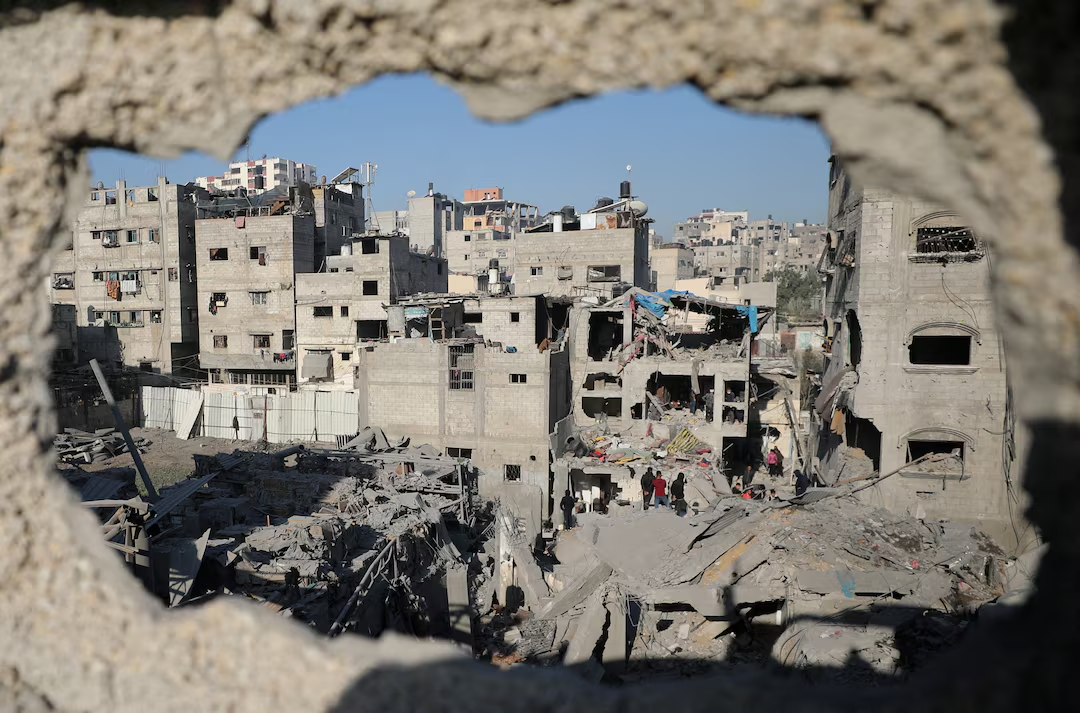
According to Gaza’s health authorities, nearly 54,000 Palestinians have been killed, and the region’s infrastructure and living conditions have been severely impacted.
Aid organizations have also reported alarming levels of malnutrition across the coastal strip, highlighting the urgent humanitarian crisis caused by the prolonged conflict.
