

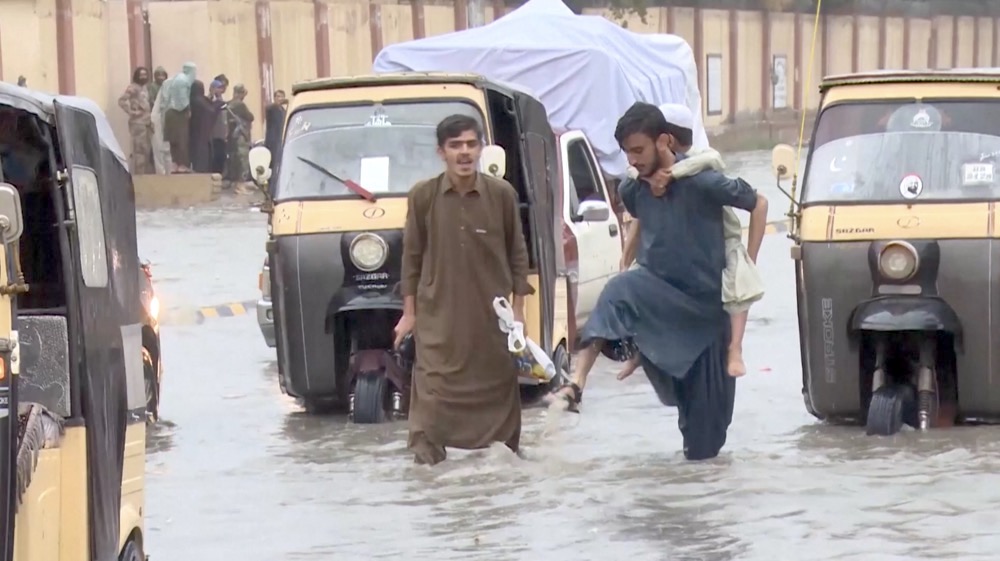

Almost 50% of the 266 people who have died due to Pakistan’s ongoing monsoon season were children, officials confirmed on Friday, raising alarm over growing climate-related dangers. The deaths occurred largely during school holidays, when children were more likely to play outdoors in flooded areas.
According to Mazhar Hussain, an official from the Punjab Provincial Disaster Management Authority (PDMA), children have been particularly vulnerable during this year’s unusually intense monsoon. Since the rains began on June 26, at least 126 children have lost their lives, mainly due to drowning, electrocution, and building collapses.
“Children are especially at risk,” Hussain told AFP. “They tend to play in waterlogged streets or bathe in floodwater, often unaware of live electricity wires and other hidden hazards. With schools and colleges closed for the summer holidays in Punjab, their exposure has increased drastically.”
Punjab, Pakistan’s most populous province, has recorded 70% more rainfall this year compared to the same period in 2024. The monsoon’s devastating toll has come earlier than usual. A spokesperson from the National Disaster Management Authority (NDMA) noted that the worst downpours typically occur later in the season, especially in August.
“This year, the severity and timing of the rains have shifted,” the spokesperson explained. “We’re seeing impacts now that we usually expect in August.”
The NDMA has warned that further rainfall is expected to intensify through August. Since the monsoon began, incidents such as flash floods, lightning strikes, landslides, and collapsing structures have led to over 266 deaths across the country, leaving hundreds injured.
Tragic events have not been limited to urban areas. In Gilgit-Baltistan, a mountainous tourist region in northern Pakistan, a landslide triggered by heavy rain swept away multiple vehicles this week. Earlier, in late June, 13 tourists were killed when a sudden flood engulfed a raised riverbank where they had sought shelter.
The monsoon season typically spans from late June to September and brings between 70% to 80% of South Asia’s annual rainfall. While these rains are critical for agriculture, replenishing reservoirs, and sustaining millions of rural livelihoods, they also pose deadly risks in areas lacking sufficient infrastructure and disaster preparedness.
Pakistan’s monsoon rains are becoming increasingly erratic due to climate change. In 2022, catastrophic floods submerged nearly a third of the country, killing more than 1,700 people and displacing millions.
This year’s early surge in fatalities, especially among children, has heightened concerns about the country’s preparedness and resilience in the face of extreme weather patterns. As more rain is forecasted in the coming weeks, authorities continue to urge the public to remain vigilant and follow safety advisories to minimize further loss of life.
