

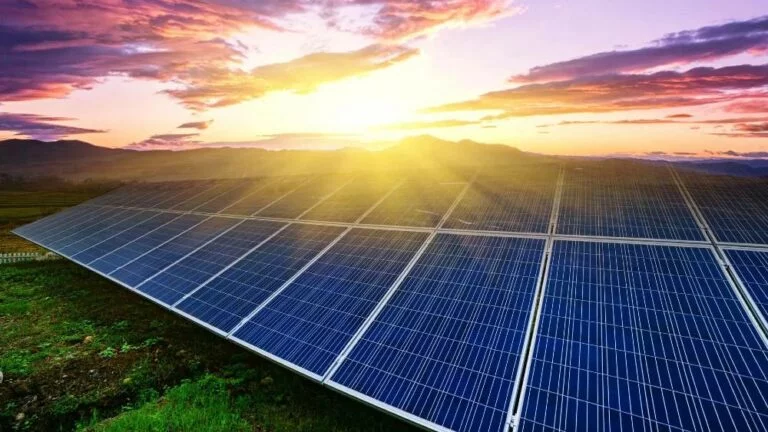

Imported Solar Panels
ISLAMABAD: The government led by Prime Minister Shehbaz Sharif is aiming to generate Rs20 billion in tax revenue during the fiscal year 2025–26 by imposing an 18% General Sales Tax (GST) on imported solar panels and photovoltaic cells.
According to official documents, this decision is part of a broader fiscal reform agenda and is aligned with commitments made under Pakistan’s ongoing programme with the International Monetary Fund (IMF).
The move suggests that the government anticipates solar imports to exceed Rs110 billion in the upcoming fiscal year, despite growing concerns from industry stakeholders. They fear the newly proposed tax could slow the country’s momentum toward solar energy adoption — a trend that has accelerated in recent years due to skyrocketing electricity prices and unreliable power supply.
Finance Minister Muhammad Aurangzeb, during his budget address, formally announced the 18% GST on imported solar panels. He justified the measure as an effort to correct market distortions and promote domestic manufacturing.
Aurangzeb highlighted that while local solar panel assemblers have long been subject to the GST, imported panels have been exempt, creating an uneven playing field that has discouraged local production.
The finance minister asserted that this policy shift is necessary to strengthen Pakistan’s domestic solar industry, which has struggled to compete with cheaper imports from countries like China. The tax is also being framed as part of a broader attempt to introduce fairness and consistency into the sales tax regime across sectors.
The imposition of this tax comes at a time when solar energy is playing an increasingly crucial role in Pakistan’s power mix. According to the UK-based energy think tank Ember, solar power accounted for over 14% of the national energy supply in 2024, up significantly from just 4% in 2021. In the process, it has overtaken coal to become the third-largest source of electricity generation in the country.
Rapid adoption of solar systems has been especially noticeable at the household and small-business level. The Islamabad-based think tank Renewables First reported that Pakistan’s net-metered solar capacity surged from 1.3 gigawatts in FY2023 to 4.9 gigawatts by March 2025 — more than tripling in under two years. This growth was largely driven by citizens and companies seeking relief from persistent power cuts and escalating utility bills.
Despite concerns from the solar industry that the new tax could discourage small-scale investors and slow the sector’s expansion, officials remain confident. They argue that the underlying demand for solar energy — viewed as a long-term solution to energy inflation and supply instability — remains strong enough to absorb the added costs.
Federal Board of Revenue (FBR) Chairman Rashid Langrial reiterated this perspective during a recent parliamentary briefing. He stated that the new tax is meant to close the gap between domestic and imported products, offering domestic manufacturers a much-needed competitive edge.
In addition to revenue generation, the measure fits within the IMF’s broader push for Pakistan to expand its tax base, phase out energy subsidies, and implement structural reforms in the energy sector. The government maintains that these changes are essential for stabilizing the economy and securing future international financial assistance.
