

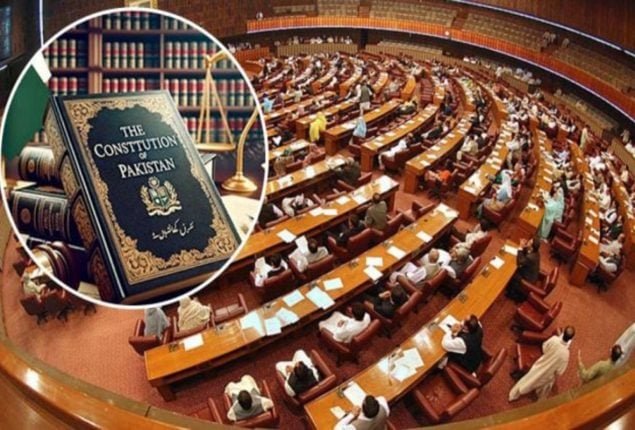

The federal government has announced that it will present the 27th Constitutional Amendment Bill in the Senate on November 7, marking a key step in its efforts to advance constitutional reforms.
According to sources, debates on the proposed amendment will take place in both houses of Parliament, with discussions scheduled for Friday and Saturday (November 7-8). Following its presentation, the bill is expected to be referred to the relevant standing committee, with a possible approval date set for November 10.
The Senate session will reportedly continue even over the weekend, while the overall parliamentary session is scheduled to run until November 14.
The government has intensified consultations on the amendment in recent weeks, with Prime Minister Shehbaz Sharif directing his team to ensure that all coalition partners are taken into confidence ahead of the bill’s presentation.
Following discussions with the Pakistan Peoples Party (PPP), the government plans to engage other key parties, including MQM-Pakistan, Pakistan Muslim League (Q), Istehkam-e-Pakistan Party (IPP), Awami National Party (ANP), and Jamiat Ulema-e-Islam (F), to ensure broad consensus on the proposed reforms.
Preliminary details of the 27th Amendment indicate that it includes revisions to Article 243 and may seek to bring certain educational matters back under federal jurisdiction.
Additionally, the amendment is expected to cover proposals related to the establishment of a constitutional court, reforms to the National Finance Commission (NFC) Award, and clauses concerning the Election Commission of Pakistan.
Government insiders emphasized that the final amendment package will be prepared in close consultation with all stakeholders before being put to a vote, ensuring that the proposed reforms address key governance and institutional issues.
The presentation of the 27th Amendment in the Senate is seen as a critical milestone in the government’s broader constitutional reform agenda, aimed at strengthening federal oversight, improving institutional frameworks, and addressing legislative and administrative gaps across Pakistan.
