

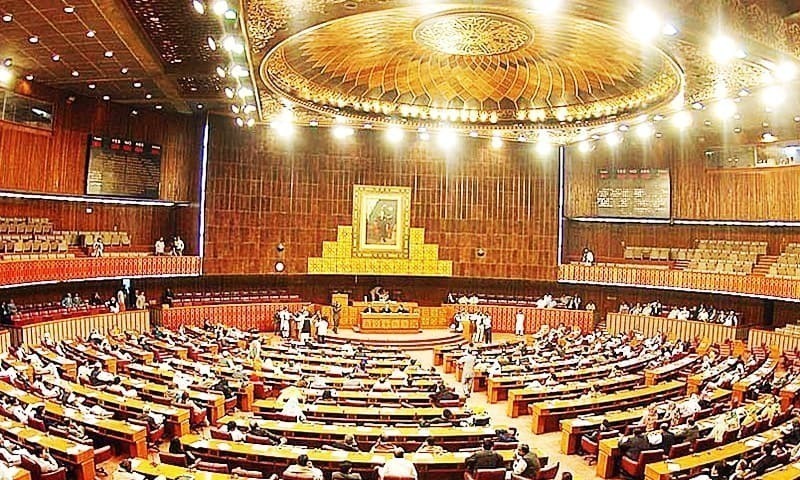

The latest release exceeds the ceiling set by the Ministry of Finance, raising concerns over fiscal discipline.
ISLAMABAD: The coalition government has significantly ramped up discretionary spending on parliamentarians’ schemes, nearly tripling the fund releases to Rs48.3 billion this month, in violation of the Ministry of Finance’s prescribed limits.
The total release of Rs48.3 billion is Rs19 billion more than the ceiling set by the Ministry of Finance for the July-March period of the current fiscal year.
Documents show that the Ministry of Planning, under the direction of the Planning Minister, authorized an “upfront one-liner” release of nearly Rs19 billion for parliamentarians’ schemes—beyond the established quarterly limits. These funds are part of the Sustainable Development Goals Achievement Programme (SAP), which manages parliamentarians’ schemes.
Despite multiple attempts to get an official response, neither the Ministry of Planning’s spokesperson nor the Cabinet Secretary has commented on the matter.
The funds have been released as a “single line” budget to the Cabinet Division, which then allocates them to specific schemes. Official documents reveal that between January 13 and 17, the Ministry of Planning authorized an additional Rs30.9 billion, bringing the total releases for parliamentarians’ schemes to Rs48.3 billion by mid-January. This marks a significant increase from the Rs17.5 billion sanctioned by December 2024.
Sources from the Ministry of Planning explained that the release of funds was accelerated due to competing demands from coalition parties for development activities in their constituencies. Under the Finance Ministry’s Budget Release Strategy, up to 60% of the allocated budget for parliamentarians’ schemes can be released during the first three quarters of the fiscal year. This 60% limit amounts to Rs29 billion of the total Rs50 billion allocated for these schemes.
The Finance Ministry imposed these ceilings to control spending in line with the targets of the International Monetary Fund (IMF), which aims for primary budget surpluses. However, the Planning Ministry exceeded this ceiling with the release of Rs12.5 billion on January 13, which brought the total to Rs30 billion—slightly above the maximum ceiling. Subsequently, the Cabinet Division requested “additional funds,” leading to the authorization of another Rs18.4 billion by Planning Minister Ahsan Iqbal on January 17.
According to official documents, the Planning Minister granted this request for additional funds, which now brings the total authorizations for the SDGs programme to Rs48.4 billion for the current fiscal year.
This move has raised concerns over fiscal discipline, as the release violates the Ministry of Finance’s guidelines, which aim to manage public funds responsibly.
The government had initially proposed Rs1.4 trillion for the federal development budget for the year but reduced it to Rs1.1 trillion to address budget shortfalls and fund electricity subsidies. By December, actual development spending stood at just Rs148 billion, or 13.5% of the annual budget.
With the new fund releases, questions remain about the impact on the broader fiscal strategy and the balance between political demands and financial sustainability.
