

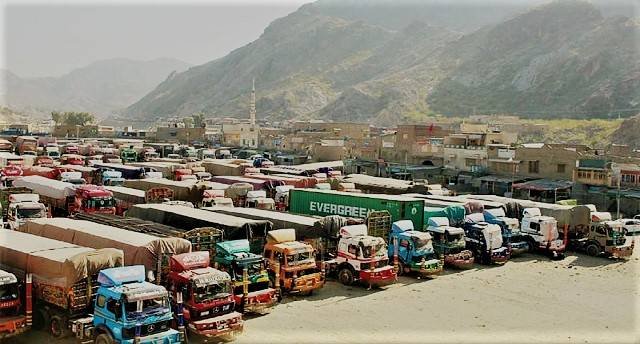

The federal government has permitted the re-export of transit cargo stranded at Pakistani ports, providing relief to Afghan importers facing mounting demurrage charges due to the prolonged closure of the Pakistan-Afghanistan border.
Importers involved in Afghan Transit Trade (ATT) had urged the Ministry of Commerce to grant a one-time waiver for the re-export of more than 6,500 containers stuck mainly at Karachi ports. These containers have been accumulating heavy demurrage costs since cross-border trade came to a halt after the border was closed on October 11, 2025.
The shutdown followed a sharp deterioration in Pakistan-Afghanistan relations amid tensions linked to the banned Tehreek-i-Taliban Pakistan (TTP). After several rounds of talks, Pakistan declared negotiations effectively over on November 7, prompting Afghanistan to suspend trade ties. Pakistan had already sealed the border after clashes earlier in October.
A senior Ministry of Commerce official confirmed that re-export permissions are being issued to importers on a case-by-case basis. “Yes, we have issued letters to individual importers who are approaching the ministry to re-export their cargo,” the official said, adding that the commerce minister is empowered to grant one-time exemptions. The ministry has not issued a formal public notification but has begun processing requests directly.
The largest share of stranded cargo—around 3,000 containers—originates from Malaysia and consists mainly of palm oil destined for Afghanistan. Letters permitting re-export have already been issued to most palm oil importers, though officials declined to disclose exact figures.
Customs officials stated that a relatively small number of containers, between 600 and 700, are currently stuck at the Chaman and Torkham border points, with the bulk held at Karachi’s ports. Much of the cargo originates from China and Vietnam, and diplomats from both countries reportedly approached Islamabad seeking permission for re-export.
The decision allows Afghan importers to reroute goods through alternative ports and corridors. Officials say the move is intended to ease financial pressure and prevent further trade disruptions as bilateral commerce remains suspended.
