

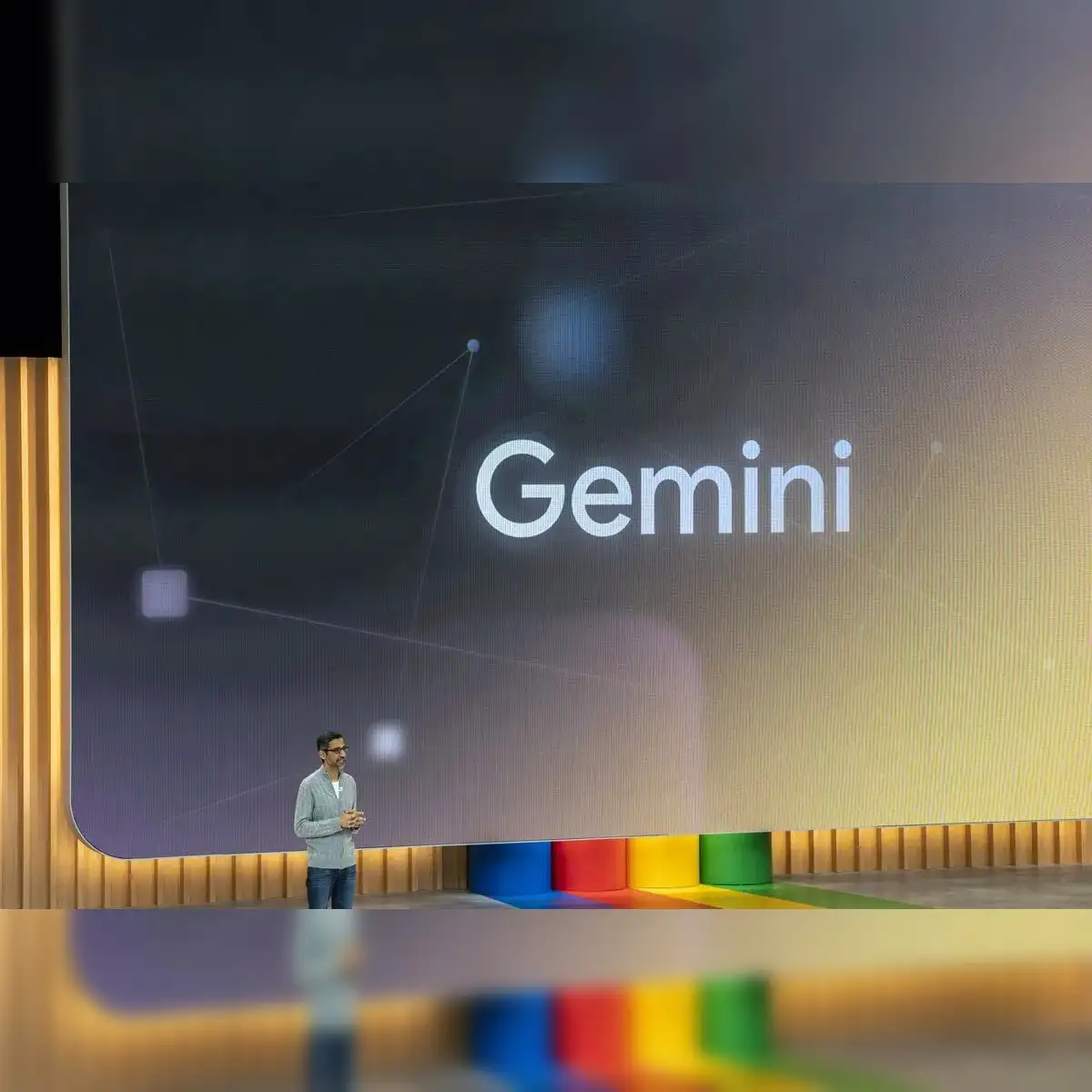

Google unveiled its most sophisticated artificial intelligence system on Tuesday, deploying Gemini 3 across its dedicated application and flagship search platform as the tech giant accelerates efforts to maintain competitiveness in the rapidly advancing AI landscape.
The latest iteration represents Google’s most capable AI model to date, featuring multimodal processing that interprets text, images, audio, and video simultaneously. The technology powers next-generation digital assistants capable of creating applications through simple conversational commands.
Koray Kavukcuoglu, Google’s AI division head, characterized the release as transformative during a media briefing, emphasizing the model’s potential to democratize innovation and enable users to materialize creative concepts effortlessly.
The deployment reaches massive scale immediately. Over 650 million monthly Gemini app users gain access, while more than two billion Google Search users experience enhanced capabilities through Gemini-powered Overview features integrated directly into search results.
Google’s aggressive development timeline stands out prominently. Gemini 3 arrives merely nine months following its predecessor, demonstrating the company’s determination to counter OpenAI’s market dominance following ChatGPT’s explosive growth. This rapid iteration follows Google’s challenging early period, when widely criticized generative AI mistakes forced strategic recalibration after launching the original Gemini in late 2023.
Technical advancements define the new release. Product Vice President Robby Stein highlighted significant improvements in reasoning and complex problem-solving, enabling users to obtain answers to sophisticated queries directly through search interfaces. Senior Director Tulsee Doshi emphasized enhanced natural language processing with superior depth, precision, and contextual understanding compared to earlier versions.
Google simultaneously introduced Antigravity, an autonomous development platform where AI agents generate functional code from plain-language instructions, streamlining software creation workflows. Enhanced security protocols provide stronger defenses against cyberattacks, prompt manipulation, and emerging vulnerabilities.
CEO Sundar Pichai acknowledged mounting concerns regarding AI infrastructure investments while urging measured expectations, advising users against blind reliance on AI-generated responses despite the technology’s remarkable capabilities.
