

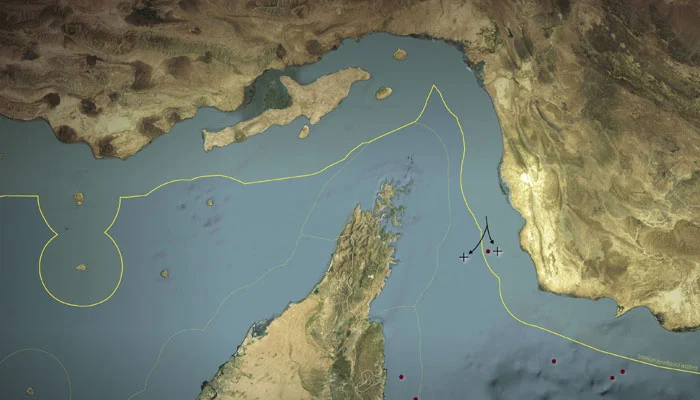

Strait of Hormuz
TEHRAN/TEL AVIV: In the wake of intensifying hostilities between Iran and Israel, Tehran is seriously contemplating the closure of the Strait of Hormuz — the world’s most critical maritime oil passage — as military confrontations between the two regional rivals escalate.
The strategic waterway, which lies between Oman and Iran, is responsible for facilitating a significant percentage of the globe’s oil supply, making this potential move a cause of international concern.
According to Iranian state media outlet IRINN, a member of Iran’s parliamentary security commission, Esmail Kosari, confirmed that discussions regarding shutting down the Strait are actively underway.
The statement comes amidst another night of missile exchanges between Iran and Israel, with both nations trading drone and missile strikes. Saturday night marked the second consecutive evening of heightened conflict, characterized by loud explosions, air raid sirens, and widespread panic in urban areas.
Eyewitness accounts reported missiles flying over Jerusalem, while warning sirens blared across Haifa, signaling incoming projectiles. The Israeli Defense Forces (IDF) confirmed they had detected a wave of missiles launched from Iran and stated that their air defense systems were actively engaging the threats. “Upon receiving an alert, the public is instructed to enter a protected space and remain there until further notice,” the IDF emphasized in a public advisory.
Iranian state television reported that the country’s current military operations include a series of coordinated missile and drone attacks aimed at key Israeli targets. These actions are reportedly part of a broader strategy in response to Israel’s previous strikes, which have included high-profile assassinations of Iranian military figures and attacks on critical infrastructure.
The rising tensions are also impacting neighboring countries. Iraq, alarmed by the growing regional instability, has officially called on the United States to prevent Israeli fighter jets from using Iraqi airspace to conduct operations against Iran.
In a statement, Iraqi military spokesperson Sabah al-Numan appealed to Washington to honor its bilateral agreements with Baghdad and ensure the sovereignty of Iraqi airspace is respected. “The Iraqi government urges the US to uphold its responsibilities under the agreements signed between the two countries and prevent aircraft belonging to the Zionist entity from once again violating Iraqi airspace,” he said.
Meanwhile, Oman has announced the cancellation of a planned diplomatic meeting between Iran and the United States that was scheduled to take place in Muscat. Omani Foreign Minister Badr Albusaidi confirmed the cancellation via a social media post, saying, “The Iran-US talks scheduled to be held in Muscat this Sunday will not now take place.
But diplomacy and dialogue remain the only pathway to lasting peace.” Iranian Deputy Foreign Minister Abbas Araghchi echoed similar sentiments, suggesting that talks were no longer viable as long as Israeli attacks continued.
In a further escalation, Israeli military officials declared they had achieved “aerial freedom of action” across western Iran, including airspace reaching Tehran. “Tehran is no longer immune,” stated IDF spokesperson Brigadier General Effie Defrin, implying that Israeli air operations could now target deeper Iranian territory without significant resistance.
With military confrontations intensifying and the Strait of Hormuz potentially at risk, the situation in the Middle East remains volatile, with broader implications for global energy security and regional peace efforts.
