

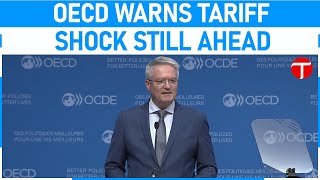

Global growth is proving more resilient than anticipated, yet the OECD has warned that the full effects of the US tariff hikes are still to unfold. In its latest Economic Outlook Interim Report, the organisation noted that firms have so far absorbed much of the shock through slimmer profit margins and inventory buffers, but these measures will not last indefinitely.
The tariff hikes, which raised the effective US import duty rate to nearly 19.5 percent by late August — the highest since 1933 — are expected to weigh more heavily as stockpiled goods are depleted and higher rates continue to take effect.
OECD Secretary-General Mathias Cormann said the real impact of tariffs would become clearer in the coming months, particularly as trade and investment feel the pressure.
While the organisation upgraded its global growth forecast for 2025 to 3.2 percent, up from June’s 2.9 percent projection, it expects growth to slow to 2.9 percent in 2026 as the temporary boost from inventory building fades.
In the United States, growth is forecast to ease to 1.8 percent in 2025 before slowing further to 1.5 percent in 2026. An ongoing boom in AI investment, fiscal support measures, and expected Federal Reserve rate cuts are seen cushioning the economy from the tariff impact.
China, meanwhile, is projected to grow 4.9 percent in 2025 before decelerating to 4.4 percent in 2026 as fiscal stimulus wanes and export momentum eases.
The eurozone outlook remains subdued, with growth seen at 1.2 percent in 2025, supported by German spending but offset by fiscal tightening in France and Italy. Japan is expected to benefit from strong corporate earnings this year before slowing to 0.5 percent growth in 2026.
The OECD also anticipates looser monetary policy in most major economies, though Japan is projected to continue raising rates gradually.
