

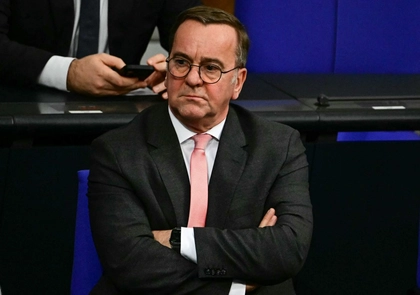

Germany’s Defence Minister Boris Pistorius has expressed openness to deploying German troops to help secure a demilitarized zone in Ukraine, should a ceasefire agreement be reached with Russia. In an interview published on Saturday in Suddeutsche Zeitung, Pistorius indicated that Germany, as the largest NATO partner in Europe, would likely play a role in such a mission.
Pistorius also reiterated Germany’s goal of allocating around 3% of its GDP to defence spending. This comes as U.S. President-elect Donald Trump has called on NATO members to commit 5% of their national output to defence, a demand that has already been dismissed by German Chancellor Olaf Scholz as excessive.
When asked about the potential deployment of German forces to secure a buffer zone between Russia and Ukraine, Pistorius said, “We’re the largest NATO partner in Europe. We’ll obviously have a role to play.” He added that the matter would be addressed “in due time.”
Trump, who takes office on Monday, had previously stated during his campaign that he could end the conflict between Ukraine and Russia in under 24 hours. However, his team has since suggested that more time may be required, with discussions possibly beginning soon, including a potential meeting between Trump and Russian President Vladimir Putin.
NATO Secretary General Mark Rutte stated on Monday that Ukraine is not yet in a position to initiate peace talks with Russia.
Pistorius acknowledged that Russia currently occupies approximately 18 to 19 percent of Ukrainian territory but pointed out that, despite nearly three years of conflict, Russia has not gained additional ground and has suffered significant losses in its military efforts.
The United States recently claimed that Russia lost nearly 1,500 soldiers a day in November.
On the topic of Germany’s contribution to NATO defence spending, Pistorius said, “We should be talking more about three percent than two,” referencing the current 2% of GDP Germany allocates to defence.
Chancellor Scholz had previously rejected Trump’s call for NATO members to raise their defence spending to 5% of GDP, noting that for Germany, this would require an additional 150 billion euros annually.
