

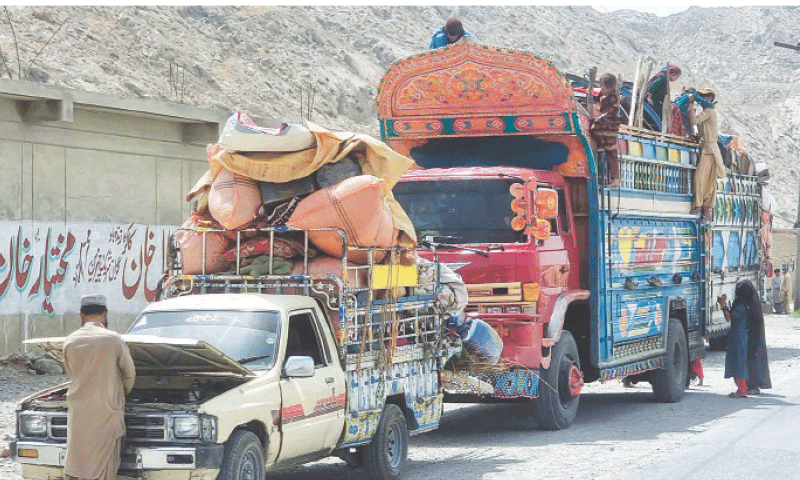

Germany has announced an immediate halt to its Afghan refugee resettlement program, revoking previous commitments and blocking hundreds of Afghans from entering the country due to security concerns and shifting political priorities. The decision affects 640 Afghan citizens waiting in Pakistan for relocation, as well as around 130 former Afghan local staff who worked for German ministries.
Interior Ministry spokeswoman Sonja Kock confirmed that Afghans previously promised admission will be informed that there is no longer political interest in their resettlement.
The move reflects a broader policy shift driven by Germany’s ruling coalition of CDU, CSU, and SPD, which agreed to scrap Afghan resettlement programs as much as possible. Chancellor Friedrich Merz cited crimes involving Afghan refugees and security concerns as reasons for the stricter stance.
Since the Taliban takeover in 2021, Germany had pledged asylum to vulnerable Afghans, including women’s rights activists, journalists, lawyers, and opposition figures.
Government data shows around 4,000 Afghan local staff and nearly 15,000 family members were accepted between 2021 and April 2025. However, the current government has suspended most of these commitments, leaving about 1,000 people in limbo in Pakistan.
Some refugees may still enter Germany through legal action. Aid group Kabul-Luftbrücke reported 84 successful lawsuits, 195 pending cases, and additional preparations underway. Advocacy groups, including Human Rights Watch, Pro Asyl, and Brot für die Welt, have urged Interior Minister Alexander Dobrindt to honor commitments promptly, calling it a test of Germany’s credibility and humanity.
While affected Afghans will not be immediately homeless and can remain in rented guesthouses in Pakistan, their future remains uncertain.
Germany has also offered to book flights back to Kabul, though conditions there remain unclear. The sudden policy reversal has caused widespread anxiety among refugees who have already lived under prolonged threat, underscoring the high stakes of the resettlement program and the fragile security situation in the region.
