

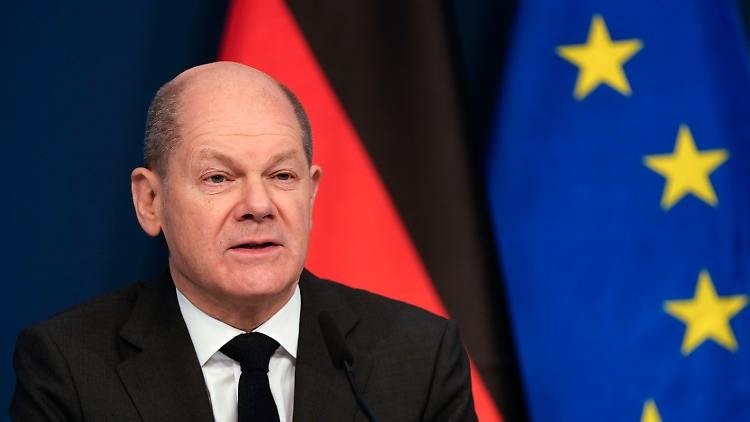

German Chancellor Olaf Scholz lost a confidence vote on Monday, setting the stage for early elections in Europe’s largest economy, scheduled for February 23. The vote, which Scholz had anticipated losing, paves the way for President Frank-Walter Steinmeier to dissolve the Bundestag and call for new elections.
The vote followed a heated debate, with political opponents exchanging sharp criticisms, offering a preview of the election campaign to come. Scholz, 66, faces a challenging political landscape, trailing in the polls behind conservative leader Friedrich Merz of the Christian Democratic Union (CDU), the party of former Chancellor Angela Merkel.
Scholz’s political crisis deepened after his three-party coalition, which had been in power for over three years, collapsed on November 6. The breakdown occurred amid a series of economic and geopolitical challenges, including a faltering economy affected by high energy prices and growing competition from China, as well as tensions with Russia over the war in Ukraine.
The vote in the Bundestag saw 207 MPs vote in favor of Scholz, while 394 voted against him, with 116 abstentions. During the debate, Scholz outlined plans for significant spending on security, business, and social welfare, but Merz criticized him for failing to take such actions earlier, asking, “Were you on another planet?”
Scholz defended his record, pointing to increased defense spending, which he claimed had been neglected by previous CDU-led governments. “It is high time to invest powerfully and decisively in Germany,” he said, emphasizing the threat posed by Russia’s war in Ukraine.
Merz, however, accused Scholz of leaving the country in “one of the biggest economic crises of the postwar era.” He added, “You had your chance, but you did not use it … You, Mr. Scholz, do not deserve confidence.”
Scholz’s coalition of Social Democrats (SPD), the left-leaning Greens, and the liberal Free Democrats (FDP) was further strained after Scholz fired FDP Finance Minister Christian Lindner on November 6, following a breakdown in their cooperation over fiscal and economic policies. This led to Scholz running a minority government with the Greens, which has struggled to pass key legislation and set a new budget.
German politics has been historically stable, dominated by the two major parties, the CDU-CSU and the SPD, with the smaller FDP often acting as a kingmaker. However, the political landscape has become more fragmented with the rise of the far-right Alternative for Germany (AfD), which now holds around 18 percent of the vote.
The upcoming election comes at a time of significant change for Germany, which is grappling with the reorientation of its economy and foreign policy. Berlin-based political scientist Claire Demesmay explained that Germany’s prosperity had been built on cheap energy from Russia, security policies aligned with the US, and trade with China. Now, as these foundations are shifting, “we can see a political discourse that is more tense than a few years ago. We have a Germany plagued by doubt.”
