

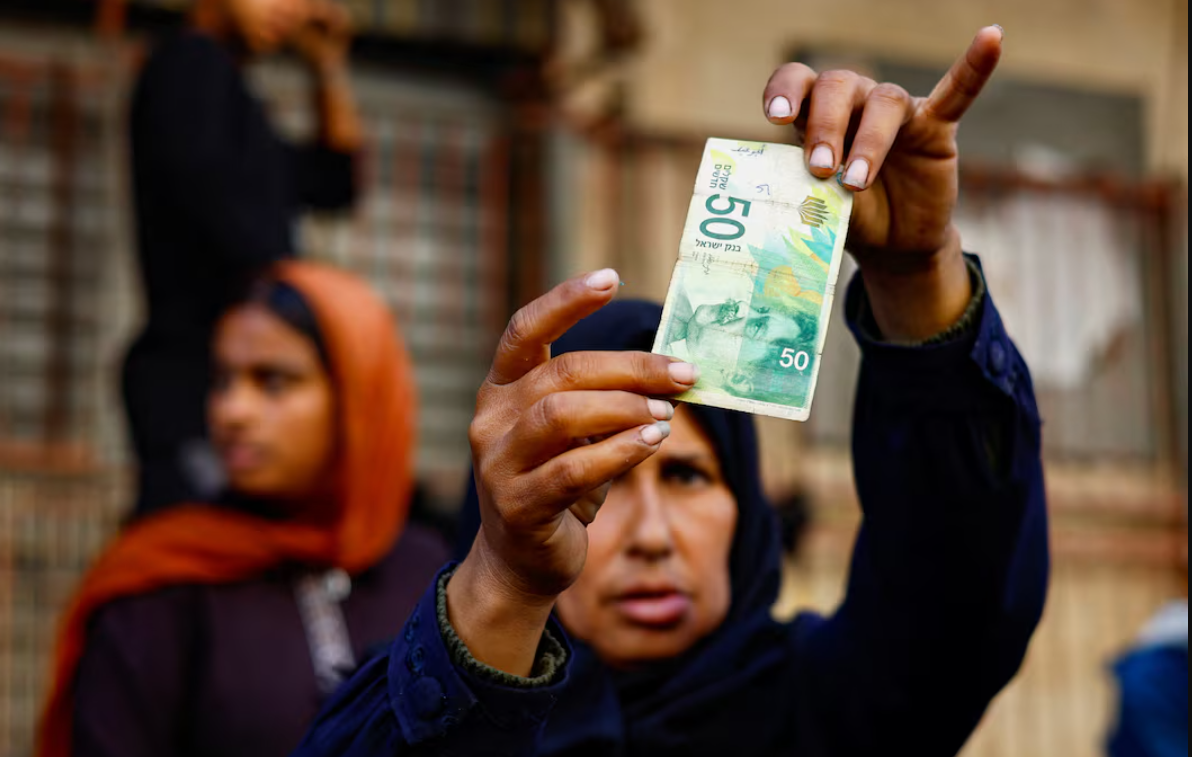

As calm returns to Gaza after years of relentless conflict, a new challenge is emerging — the complete absence of cash. Though banks have reopened, they remain empty of liquidity, leaving thousands of Palestinians unable to withdraw or use their own money.
For many residents, the relief of the ceasefire has quickly turned to frustration. The financial system, already battered by war, is barely functional. Homes, schools, and bank branches lie in ruins, and with limited access to cash, daily life has become a cycle of waiting and despair.
Banks Open Without Money
When banks resumed operations on October 16, lines of hopeful customers quickly formed. Yet the reality inside was stark — paperwork could be processed, but withdrawals were impossible.
“There is no money at the banks,” said one resident, echoing the frustration of many others waiting outside financial institutions. People could only perform basic electronic transactions before leaving empty-handed.
Cash remains essential in Gaza for most transactions — from food purchases to utility payments. However, restrictions on the transfer of banknotes have paralyzed the economy, preventing people from accessing even small amounts for daily use.
Profiteers Exploit the Crisis
With cash nearly impossible to obtain, some merchants have stepped in — for a price. They offer to exchange electronic salaries for cash, charging exorbitant fees of 20% to 40%.
These conditions have turned survival into a costly ordeal. “People spend days trying to get their own money,” said a mother of seven, describing the endless wait at bank queues that often yield less than 500 shekels.
Surviving on the Bare Minimum
A few individuals have found ways to adapt. One woman earns a modest income by repairing damaged banknotes. Her work allows her to buy only basic items — bread, beans, or falafel. For many, vegetables and other essentials are now considered luxuries.
Some residents have shifted to electronic transfers, even for small purchases like eggs or sugar. Yet sellers often add extra charges for such payments, deepening the economic strain.
Beyond the Ceasefire: A Crisis Without End
The shortage of physical money is now one of Gaza’s most pressing issues. It has compounded the devastation left by war — where countless families have lost their homes, jobs, and savings. With no access to cash, bartering is slowly re-emerging as a means of survival.
Merchants have grown accustomed to using banknotes so worn that only the serial number confirms their worth. “As long as the number is visible, it’s still money,” said one trader, summing up Gaza’s fragile economy.
For now, while the guns may be silent, financial hardship continues to echo across Gaza’s streets. Without the free flow of cash, recovery remains painfully out of reach, and the promise of peace feels far from complete.
