

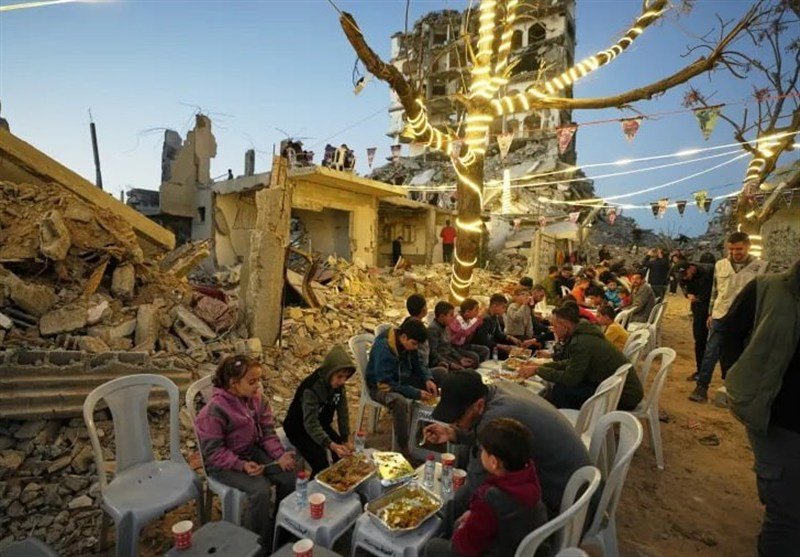

TEHRAN (Tasnim) — Palestinians in Gaza are observing Ramadan under mounting economic strain as soaring food prices and widespread unemployment deepen hardship across the besieged territory.
An analysis by Al Jazeera, based on official data from Gaza’s Ministry of Economy and the Palestinian Central Bureau of Statistics, shows that the cost of basic meals has nearly doubled since the war began on October 7, 2023. Although a ceasefire took effect in October, Israeli restrictions on goods entering Gaza continue to limit supplies and sustain inflation.
Food Costs Surge Across Staples
According to the data, chicken prices have risen from 14 shekels to 25 shekels per kilogram, while frozen fish has jumped from 8 to 23 shekels. Similarly, frozen red meat now costs 40 shekels per kilo, up from 23. A tray of 30 eggs has climbed from 13 to 35 shekels.
Vegetable prices have also surged. Tomatoes have doubled, and cucumbers have tripled from 3 to 12 shekels per kilo. Meanwhile, cheese prices have increased by up to 110 percent, raising the cost of suhoor meals.
As a result, a basic iftar for a family of six now costs about 150 shekels, compared with 79 shekels before the war. A simple suhoor costs 31.5 shekels, pushing total daily food expenses to 181.5 shekels—an 88 percent increase.
Income Collapse and Market Strain
At the same time, purchasing power has sharply declined. A United Nations report showed per capita income fell to $161 in 2024, down from $1,250 in 2022. Unemployment has surpassed 95 percent, according to union officials.
Economists attribute sustained inflation to restricted truck access and limited import competition, calling for expanded crossings and market reforms.
