

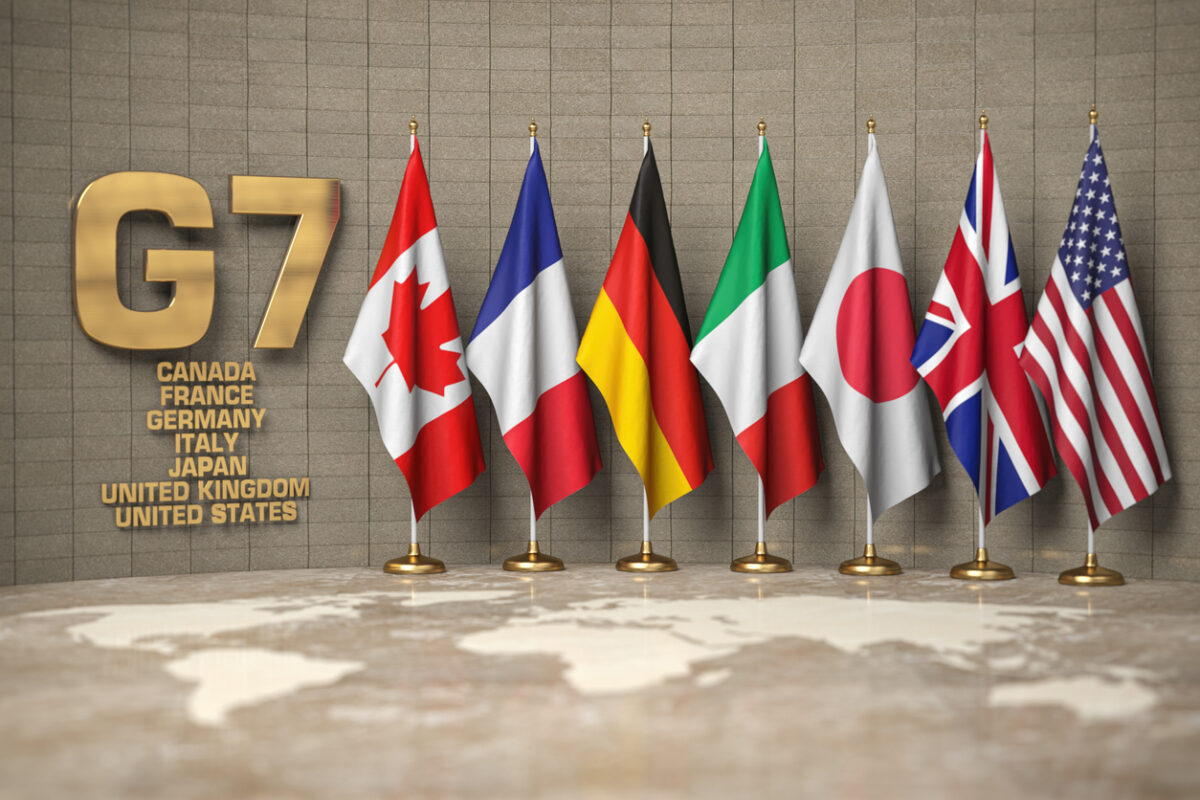

G7 leaders on Monday called for urgent de-escalation in the Middle East—starting with the intensifying conflict between Israel and Iran—shortly before U.S. President Donald Trump abruptly departed the group’s summit amid rising tensions.
In a joint statement released by Canada on behalf of the G7 nations—Britain, Canada, France, Germany, Italy, Japan, and the United States—the leaders emphasized the need for a diplomatic resolution to the Iranian crisis, alongside a broader push to reduce hostilities across the region, including a ceasefire in Gaza.
“We urge that the resolution of the Iranian crisis leads to a broader de-escalation of hostilities in the Middle East, including a ceasefire in Gaza,” the statement read. It reiterated Israel’s right to self-defense while stressing “the importance of the protection of civilians” as casualties mount on both sides.
The G7 also reaffirmed its position that Iran must never obtain nuclear weapons.
Before cutting his summit attendance short, Trump told reporters, “As soon as I leave here, we’re going to be doing something,” offering no details. He declined to confirm whether the U.S. would support Israeli military operations but maintained that Washington had not been involved in Israel’s initial strikes. The White House confirmed that U.S. forces remain in a defensive posture.
Amid growing concerns over a broader regional conflict, Trump issued a stark warning on his Truth Social platform:
“Iran should have signed the ‘deal’ I told them to sign. What a shame, and waste of human life. Simply stated, IRAN CANNOT HAVE A NUCLEAR WEAPON. I said it over and over again! Everyone should immediately evacuate Tehran!”
Macron Warns Against Civilian Strikes, Regime Change
French President Emmanuel Macron also addressed the crisis, calling for an immediate halt to attacks on civilians in both Iran and Israel. He cautioned against any effort to pursue regime change in Tehran, calling it a “strategic mistake.”
“All who have thought that by bombing from the outside you can save a country in spite of itself have always been mistaken,” Macron said. “If the United States can achieve a ceasefire, that’s a very good thing.”
His comments came as Trump prepared to convene the National Security Council to discuss the escalating crisis, according to Fox News.
Rising Civilian Toll and Nuclear Tensions
The conflict escalated dramatically last week when Israel launched wide-scale airstrikes on Iran under what it calls Operation “Rising Lion,” aimed at deterring Tehran’s nuclear program. The Israeli offensive followed months of intense operations in Gaza that drew international condemnation for targeting civilian infrastructure, hospitals, and aid workers.
Since Friday, over 224 Iranians—most of them civilians—have been killed, with more than 1,000 injured. Israel has reported 24 deaths, the majority also civilians.
Though Iran is a signatory to the Treaty on the Non-Proliferation of Nuclear Weapons (NPT), Israel is not. Despite decades of official ambiguity, Israel is widely believed to possess a nuclear arsenal of approximately 90 warheads, according to the U.S.-based Centre for Nuclear Arms Control and Non-Proliferation.
The international community has long called for Israel to place its nuclear facilities under International Atomic Energy Agency (IAEA) safeguards. United Nations General Assembly Resolution 41/93 specifically urged Israel to renounce its nuclear weapons and join the NPT, though Israel has consistently declined.
