

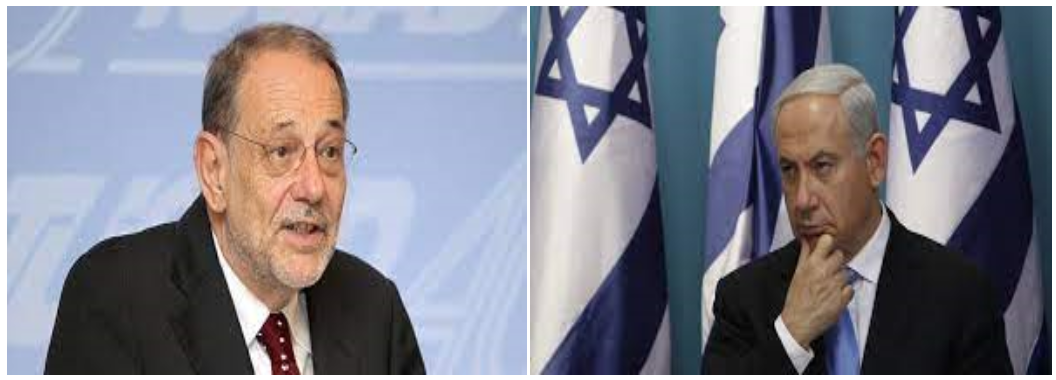

ISLAMABAD: Former NATO Chief Javier Solana made a strong statement. He characterized Israeli Prime Minister Benjamin Netanyahu as the “worst politician” in the history of Israel.

Solana expressed skepticism about recent events in Israel and Palestine. He suggested these events might lead to Netanyahu’s exit from Israeli politics.
He noted that President Joe Biden doesn’t have a favorable view of Netanyahu. Biden has actively worked to discourage Netanyahu from repeating U.S. mistakes, especially in the context of post-9/11 Iraq.
Solana pointed out that there isn’t a strong rapport between Biden and Netanyahu. In fact, Biden never hosted Netanyahu in the White House.
The former NATO Chief criticized Netanyahu’s attempts to strengthen his authority through judicial reforms in a bid to turn himself into an autocrat.
Solana also shared his opinion on the Abraham Accords, which normalized relations between Israel, the United Arab Emirates (UAE), and Bahrain. He described it as a “huge mistake” and argued that it deviated from the previous approach of countries recognizing Israel through peace negotiations with Palestine.
He highlighted the earlier notion of “recognition for peace” as a beautiful idea that had been set aside.
Before the Hamas attack, Solana spent considerable time in Gaza. He played a role in negotiating for the EU to supervise the Rafah border crossing from Gaza into Egypt, a program that began in 2005 and lasted for 19 months.
World Bank Warns Israel-Hamas Conflict Could Cause Oil Prices To Surge To $157
Meanwhile, the report suggests that global oil prices are expected to average around $90 a barrel in the fourth quarter of this year and decrease to an average of $81 in 2023 due to a slowing global economy, leading to reduced oil demand. Nevertheless, the report emphasizes the significant risk of a substantial increase in oil prices if the ongoing Middle East conflict escalates.
It notes that, since the beginning of the Israel-Hamas war, oil prices have risen by approximately 6%, whereas prices for agricultural commodities, most metals, and other commodities have seen minimal changes.
