

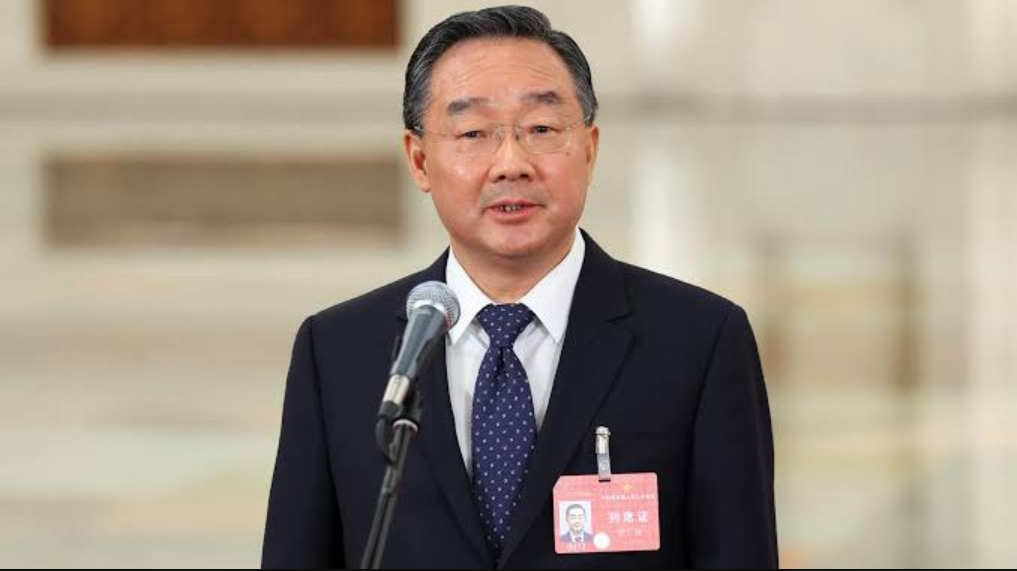

China has witnessed yet another major development in its sweeping anti-corruption campaign as former Minister of Agriculture and Rural Affairs, Tang Renjian, was sentenced to death with a two-year reprieve. The sentencing, delivered by the Changchun Intermediate People’s Court in Jilin province, highlights the government’s continuing crackdown on high-level corruption cases.
Tang, who previously held several senior posts, was found guilty of accepting bribes amounting to more than 268 million yuan, or approximately 37.6 million US dollars. These illicit gains reportedly included both cash and property collected over a period stretching from 2007 to 2024. The court confirmed that the bribes were linked to positions Tang held across different sectors during his political career.
The court suspended the execution for two years, which is standard in such cases. This means Tang may eventually face life imprisonment without parole if he demonstrates good behavior during the reprieve period. The court also noted that Tang confessed to his crimes, which was taken into account during sentencing.
Tang’s downfall is part of a broader anti-corruption drive championed by President Xi Jinping. Since taking office, Xi has repeatedly emphasized that corruption poses the most significant threat to the Communist Party’s survival and credibility. His administration has pursued officials across various levels of government, ensuring that even high-ranking figures are not exempt from scrutiny.
Tang’s political career was long and prominent before its collapse. He served as the governor of Gansu province between 2017 and 2020, where he oversaw major development programs in the western region. Later, he was appointed Minister of Agriculture and Rural Affairs, a role in which he directed national agricultural policy and rural reforms. However, in 2024, the tide turned against him. In May of that year, the anti-graft watchdog launched a formal investigation into his activities. By November 2024, he was expelled from the Communist Party and removed from his ministerial position.
The sentencing reflects Beijing’s ongoing determination to root out corruption across government institutions. The anti-graft campaign launched in 2020 extended particularly into domestic security sectors, including police, prosecutors, and the judiciary. The stated aim was to ensure these pillars of governance remain “absolutely loyal, absolutely pure, and absolutely reliable.” Tang’s case has now become one of the highest-profile examples of this ongoing purge.
Observers suggest that the punishment serves both as justice and as a deterrent to other officials. By imposing a death sentence with reprieve rather than life imprisonment, the court underscores the severity of Tang’s crimes while still leaving room for reform under strict supervision.
In January 2025, President Xi reiterated that corruption continues to rise and remains the most dangerous threat to the Communist Party’s authority. Tang’s sentencing, therefore, is likely intended as both a warning to others and a reaffirmation of the government’s stance on integrity within public service.
The case also highlights the significant sums involved in China’s corruption scandals. With Tang accused of amassing more than 268 million yuan in illegal benefits, the scale reflects systemic challenges the government continues to confront. The harsh sentence indicates that Beijing aims to make an example out of senior officials caught in wrongdoing.
As the anti-corruption campaign continues, Tang Renjian’s fate stands as a stark reminder that no official, regardless of rank or past contributions, is beyond accountability. The ruling strengthens the message that China’s leadership intends to safeguard the state from internal threats posed by bribery and misuse of power.
