

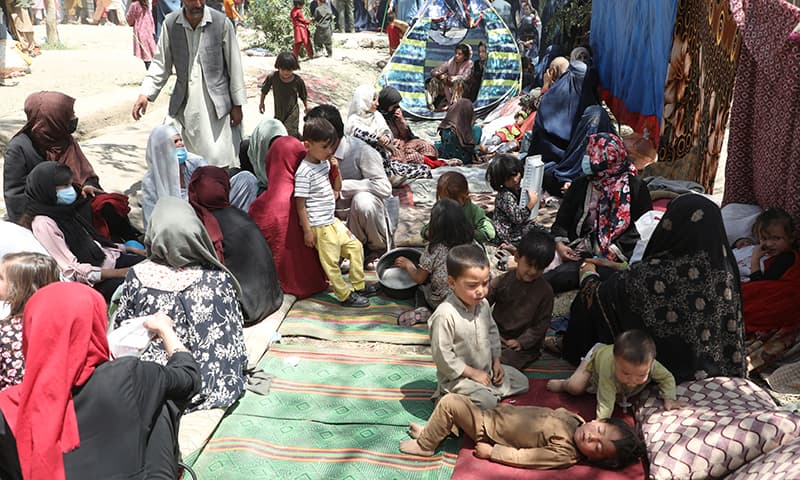

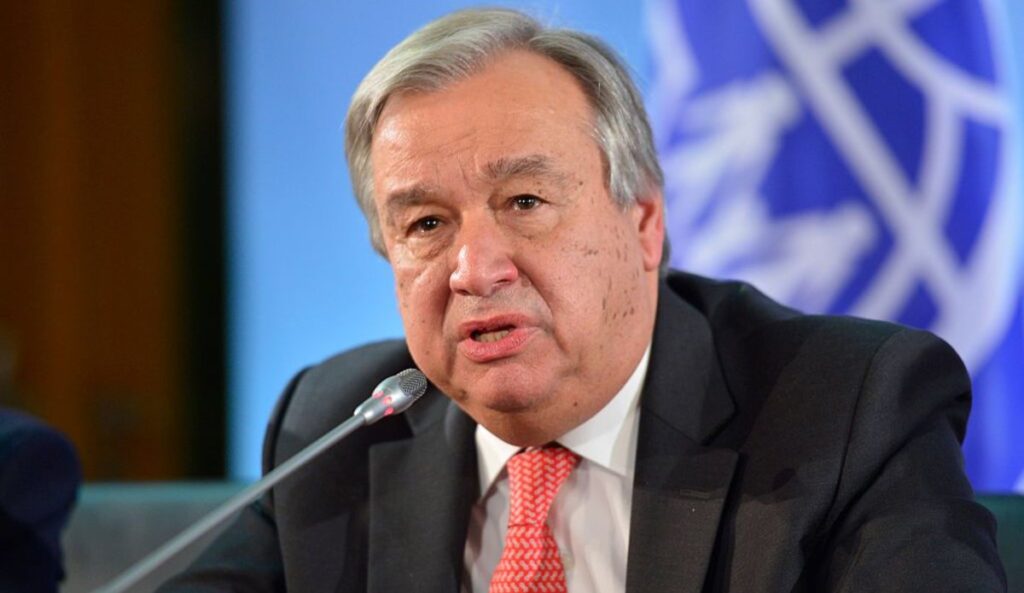
At the end of August, with the Taliban in control of most provinces of Afghanistan, UN Secretary-General Antonio Guterres cautioned that the country’s humanitarian and economic crises were getting worse, despite evacuation flights for civilians from Kabul airport coming to an end.
Expressing his concern over the situation and the threat of a total collapse in basic services, he said: “Now more than ever, Afghan children, women, and men need the support and solidarity of the international community.”
As the UN chief, Guterres was right on the money. The combined effects of a severe drought, conflict and the COVID-19 pandemic have made even the simplest of preparations for winter in Afghanistan difficult for international aid organizations.
The UN has said that 18 million out of Afghanistan’s population of 38 million are facing a humanitarian disaster, with the potential of another 18 million joining them.
A senior official of the UN World Food Program has told Arab News of the organization’s concerns, just days after it appealed for money to purchase and “preposition” food for millions of Afghans before winter snows cut off access roads to them.
Mageed Yahia, the WFP’s UAE country director and representative for the Gulf Cooperation Council region, said: “We need money urgently. As I speak, we need around $200 million just to get us from September to December, or our pipeline will break. As early as October, our pipeline of wheat will run out.”
He identified the funds crunch as the biggest challenge facing the program, the other ones being lack of security and stability, and the weather. He said even $200 million was a “drop in the ocean” in comparison with the money required to cover actual needs. A WFP estimate has put the country’s total food-funding requirements for this year at $559 million.
Yahia warned that if widespread hunger was not prevented in Afghanistan, it could lead to mass migration and more conflicts, the costs of which would dwarf the amount currently sought by the WFP.
“I think it is important to realize that the cost to the international community would be far less if the problem was tackled now instead of being allowed to grow out of control,” he added.
Citing Syria as a cautionary tale, he pointed out that in 2015, when the WFP ran out of funds in the war-torn Arab country, large numbers of people used rickety boats to cross the Mediterranean Sea and reach Europe.
In Afghanistan, the WFP has a staff of 300, including locals and foreign nationals, who operate from sub-offices in Kabul, Jalalabad, Faizabad, Mazar-e-Sharif, Kandahar, and Herat.
UN officials have said the turmoil in the country has not affected WFP operations and that all programs are running according to plan.
The WFP said it remained “dedicated to maintaining its guiding principles of humanity, impartiality, neutrality, and operational independence.”
At the same time, Yahia noted that “protection is being provided to WFP food convoys, buildings, and staff” in Afghanistan.
Before the arrival of Afghanistan’s bitterly cold winter season, the WFP typically starts planning several months in advance. Yahia described the process as “winterization — buying food from wherever it is available closest, be it in Pakistan, Kazakhstan, or even sometimes Afghanistan, then transporting it and, finally, stocking it.”
So far, high summer temperatures have masked the hardships that lie ahead for the Afghan people in winter. Summer is the time of year when the WFP “prepositions” food stocks in warehouses and with communities throughout Afghanistan. The food is then distributed to needy people before access to them is cut off by the winter snows.
But the hot summers were also to blame for what he said was Afghanistan’s second-biggest drought in the past three years.
“We are talking about more than 40 percent of the country. Crops have been lost to this drought, leaving families with incomes that are not enough even to buy food,” he added.
