

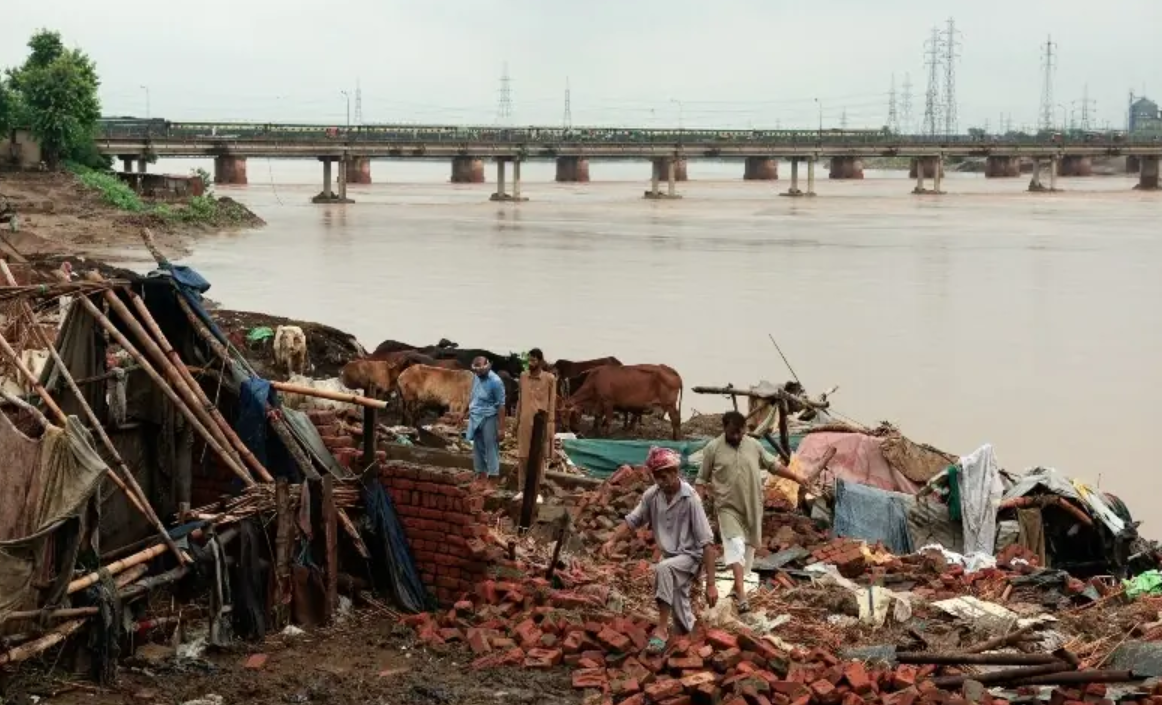

Massive floods have exposed severe irregularities in private housing schemes built along the flood-prone banks of the Ravi River in Lahore. Despite clear rules prohibiting construction in these vulnerable areas, weak enforcement and regulatory loopholes allowed housing schemes to expand unchecked. As a result, thousands of residents suffered devastating property and financial losses.
Regulatory Disparities and Weak Enforcement
The Punjab irrigation department has long declared this area as flood-prone. Yet, housing schemes continue to grow. Rules set by authorities such as the Lahore Development Authority (LDA) and tehsil municipal administrations (TMAs) forbid the approval of housing schemes in flood-prone zones. However, the Ravi Urban Development Authority (Ruda), established in 2020, interprets its regulations differently.
While Ruda’s housing scheme rules include the same conditions, approvals are often granted without an irrigation department clearance. This disparity has led to widespread confusion and unchecked development. Authorities such as LDA and TMAs are also accused of failing to prevent the mushroom growth of illegal housing societies before Ruda’s creation.
Billions Lost as Floods Hit
Recent flooding destroyed homes and businesses across approved and unapproved schemes along the Ravi. Experts argue this devastation could have been avoided if rules were enforced properly. Officials believe Ruda prioritized granting approvals and collecting fees rather than completing protective infrastructure such as embankments, river training works, and barrages.
Ruda’s Response and Ongoing Issues
Ruda defends its stance by claiming it inherited more than 100 illegal housing schemes from LDA and TMAs. Officials argue that ongoing river training works will ultimately eliminate flood risks. Developers are required to build protective embankments before receiving final approvals. However, critics note that these measures remain incomplete, leaving residents vulnerable.
A spokesperson highlighted that in areas where river training works have been completed, flooding did not cause damage. The authority maintains that funds collected from housing societies are being invested in flood protection and infrastructure development.
Experts Warn Against Construction in Flood Plains
Urban development experts stress that natural river routes should never be blocked. Extreme flooding, they warn, can overwhelm embankments and increase devastation. Sustainable planning, they argue, is essential to protect both human life and the river ecosystem.
Former engineers and environmental specialists recommend preparing a detailed report marking all flood-influenced areas. They emphasize the importance of leaving wide river margins, planting native vegetation, and restoring riparian forests to reduce flood intensity.
Call for Sustainable Urban Development
The devastation along the Ravi highlights the urgent need for responsible planning and strict enforcement of housing regulations. Authorities must prioritize river training works and ecosystem restoration before approving new developments. Without these steps, residents will continue to face devastating losses in future floods.
