

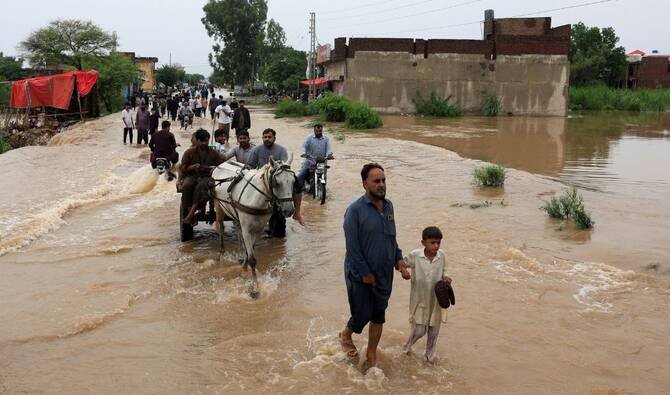

Floodwaters in Sindh and Punjab are gradually subsiding, offering some relief to communities devastated by weeks of heavy rainfall. Authorities in both provinces, however, remain vigilant as forecasts predict further rain that could raise river levels again.
Declining River Levels Across Sindh
Sindh’s barrage network shows a steady decrease in water levels. At Guddu and Sukkur barrages, inflows of 611,051 and 571,800 cusecs are reported. Both figures still exceed outflows, yet notable reductions compared to earlier peaks are observed. Similar downward trends are recorded at Kotri and Panjnad.
Despite the receding waters, the provincial administration continues to prioritize large-scale rescue and relief operations. Thousands of displaced residents are being relocated, and officials stress that support for both people and livestock remains critical.
Punjab Reports Mostly Normal Flows
Punjab’s Provincial Disaster Management Authority confirmed normal water flows in the Indus, Chenab and Ravi rivers. Flooding is now limited mainly to the Sutlej basin and Panjnad confluence. At Ganda Singhwala, the Sutlej shows a medium flood of 101,000 cusecs, while Head Islam measures 81,000 cusecs. Sulemanki reports a low flood with 90,000 cusecs.
The Indus remains at manageable levels, flowing at 196,000 cusecs at Tarbela and 169,000 at Kalabagh. At Chashma, 178,000 cusecs are reported, while Taunsa records 161,000 cusecs. The Chenab river also flows moderately, ranging between 56,000 cusecs at Marala and 80,000 at Head Trimmu. However, Panjnad continues to register a medium flood surge of 234,000 cusecs.
Relief and Rescue Efforts in Full Swing
Authorities in Sindh confirm the evacuation of over 173,000 people since the floods began. In the last 24 hours alone, 3,522 individuals were moved to safer areas. Nearly 470 people remain in relief camps, where food, water and medical services are provided.
Livestock protection remains a key priority. Over 450,000 animals have been relocated, while veterinary teams have vaccinated more than 1.3 million cattle. To support public health, 183 medical camps are active across Sindh. These facilities have treated nearly 93,000 patients since the start of the disaster.
Federal Government Begins Damage Assessment
Federal authorities have launched a detailed flood damage assessment. Officials note that a clear picture will emerge once floodwaters fully subside. A preliminary report is expected within ten days. Nearly 980 lives have already been lost, while more than 1,100 people have been injured.
Planning authorities highlight that 2.5 million people are displaced in Punjab alone, with millions of homes damaged or destroyed. International aid has started arriving, including assistance from the United States, Britain and Singapore. Additional relief is being sought through diplomatic outreach.
Climate Change at the Core of the Crisis
Officials emphasize that climate change is a driving factor behind the unprecedented floods. Melting glaciers and erratic monsoon patterns have contributed to the scale of destruction. The Ministry of Climate Change is preparing a 300-day action plan to mitigate future climate impacts.
Speculation that India deliberately released excess water has been dismissed. Experts confirm that while reservoir discharges added to river pressure, they were not intentional.
As floodwaters slowly recede, authorities remain on high alert for renewed rainfall that could bring fresh challenges. Relief operations continue to focus on saving lives, protecting livestock and restoring basic health services. Long-term recovery will depend heavily on sustained international support and effective climate adaptation strategies.
