

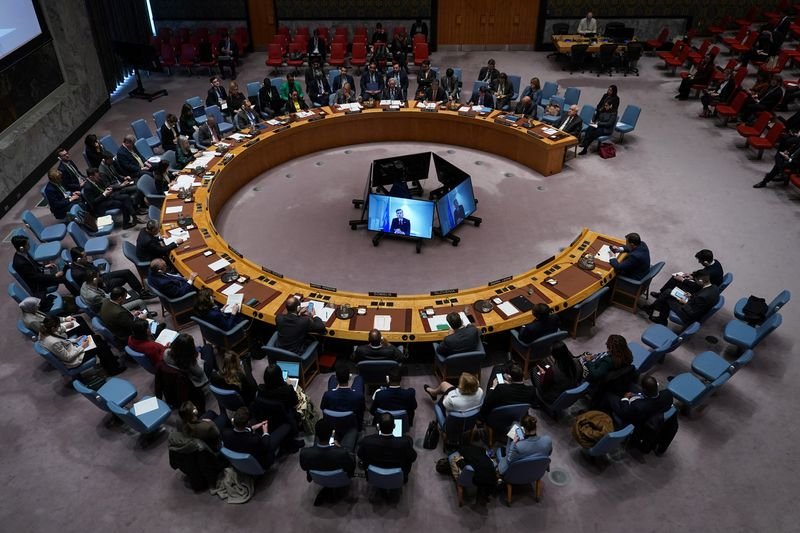

The United Nations General Assembly has elected five new non-permanent members to the UN Security Council (UNSC) for the 2026–2027 term. Bahrain, Colombia, the Democratic Republic of the Congo (DRC), Latvia, and Liberia secured their seats during the vote held on Tuesday at the UN headquarters in New York.
All five countries were elected as part of uncontested regional slates and will begin their two-year terms on January 1, 2026. They are set to replace Algeria, Sierra Leone, South Korea, Guyana, and Slovenia, whose terms will end in December 2025.
The UN Security Council, comprised of 15 members, is the only UN organ empowered to make legally binding decisions. It includes five permanent members with veto power—China, France, Russia, the United Kingdom, and the United States—and ten non-permanent members elected for staggered two-year terms.
Each year, five of the ten elected seats are rotated. Despite running unopposed in their respective regional groups, the newly elected members still required a two-thirds majority vote from the 193-member General Assembly to secure their positions.
The vote count was as follows: Bahrain received 186 votes, the DRC 183, Liberia 181, Colombia 180, and Latvia 178.
Seats on the UNSC are distributed based on geographical representation: Africa, Asia-Pacific, Latin America and the Caribbean, Western Europe and others, and Eastern Europe. This ensures balanced global participation in the Council’s decisions on peace and security.
In a related development, former German Foreign Minister Annalena Baerbock was elected president of the UN General Assembly on Monday. She will preside over the 80th session beginning in September 2025.
Baerbock, who has served as Germany’s top diplomat since 2021, will lead the assembly through key discussions and negotiations during her year-long tenure, including matters related to international peace, development, and climate action.
