

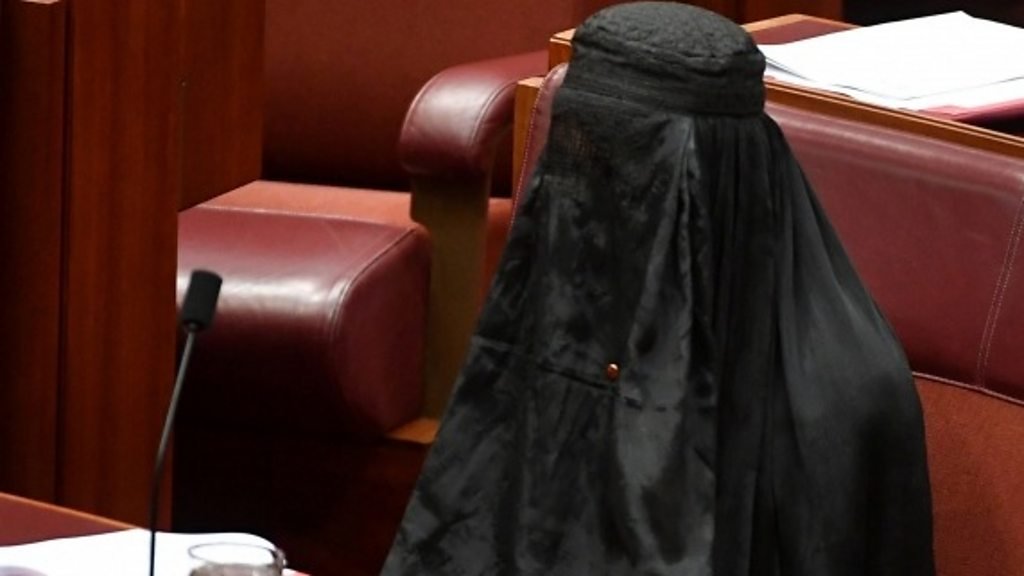

A far-right Australian politician ignited controversy on Monday after wearing a burqa in parliament, an act that drew sharp condemnation from fellow lawmakers who called it “racist” and disrespectful.
Pauline Hanson, leader of the anti-immigration One Nation party, attempted to introduce a Senate bill that would ban full-face coverings in Australia, a policy she has long championed. When her efforts were blocked, she returned to the chamber wearing a black burqa and sat down, further fueling outrage among senators.
The incident prompted strong reactions across the political spectrum. Larissa Waters, leader of the Greens in the Senate, described Hanson’s display as “the middle finger to people of faith,” calling it “extremely racist and unsafe.”
Foreign Minister Penny Wong, who also serves as leader of the government in the Senate, criticized the act as “disrespectful,” emphasizing that the chamber represents people of all faiths and backgrounds. Wong stressed the importance of conducting parliamentary proceedings with decency and respect for the diverse population that senators serve.
Hanson refused to remove the burqa despite the criticism, leading to the suspension of the Senate session. This is not the first time Hanson has donned Muslim clothing in parliament; she previously wore similar attire in a prior parliamentary stunt, highlighting her continued opposition to full-face coverings.
The demonstration comes amid broader concerns about Islamophobia in Australia. A government envoy noted in September that the country had struggled to address persistent and growing discrimination against Muslim communities.
Hanson’s act has been widely interpreted as a provocative political statement that exacerbates tensions around religious and cultural identity, while critics argue it undermines efforts to promote inclusion and respect within Australian society.
The episode underscores ongoing debates over religious freedom, multiculturalism, and political conduct in the Australian parliament, raising questions about how lawmakers balance personal political agendas with the responsibilities of representing a diverse electorate.
As the discussion around face coverings and religious expression continues, Hanson’s actions are likely to remain a focal point in national debates over faith, race, and politics.
