


Export Crisis
KARACHI: Pakistan’s export sector is facing mounting challenges due to a combination of internal structural weaknesses and external trade pressures, the World Bank has cautioned in its latest policy report. Despite years of tariff protections, the country’s export performance has steadily declined, threatening its competitiveness and long-term economic outlook.
According to the World Bank’s newly released report titled “From Inward to Outward: Pakistan’s Shift Towards Export-led Growth,” the share of exports in Pakistan’s GDP has fallen to just over 10% in 2024, down significantly from over 15% in the 1990s. This places Pakistan among the lowest-performing exporters both regionally and within middle-income countries.
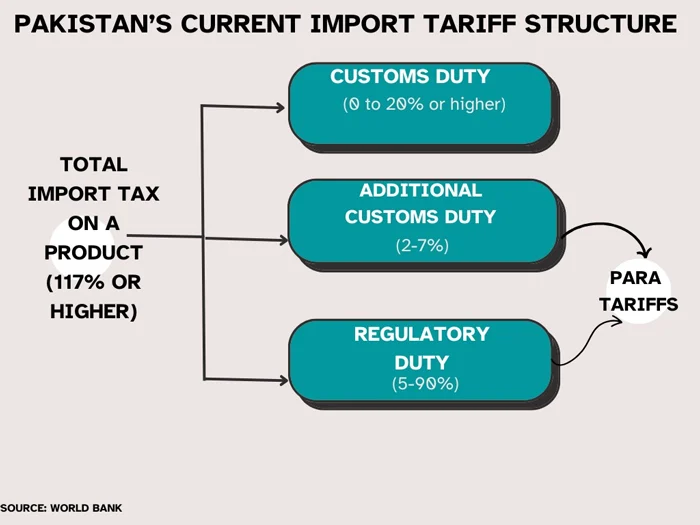
The report attributes this deterioration to a worsening business environment and an increasingly restrictive trade policy, with rising tariffs acting as a central obstacle to export-led growth.
The World Bank specifically pointed to Pakistan’s complex tariff structure—marked by high protection rates, layered import duties, and inconsistent exemptions—as a major constraint on industrial competitiveness and productivity.
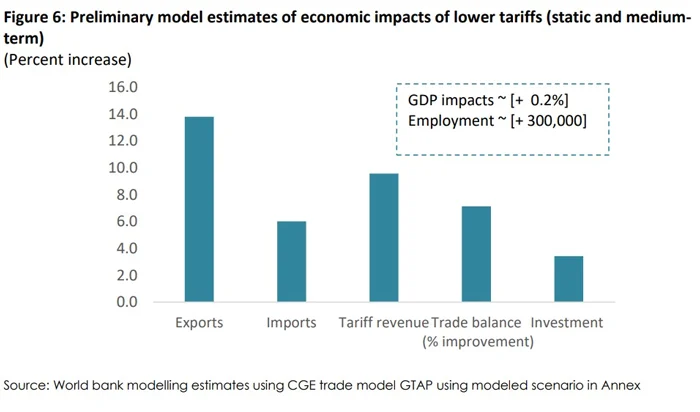
Since reaching its lowest tariff levels in the early 2000s, Pakistan has seen a steady increase in trade barriers. While the Pakistan Bureau of Statistics (PBS) reports a 6.25% year-on-year increase in goods exports to $26.86 billion in the first 10 months of FY25, the World Bank warns that this growth is not sustainable unless significant policy reforms are undertaken.
Among its recommendations, the Bank urged a shift in tariff-setting authority from the Federal Board of Revenue (FBR) to the National Tariff Board. It also proposed the creation of a National Regulatory Delivery Office to streamline policy implementation, reduce bureaucratic hurdles, and promote a more export-friendly business environment.
The World Bank welcomed the launch of Uraan Pakistan—a five-year economic reform plan introduced in December 2024—but stressed that tariff reductions must be part of a broader reform agenda. It cited major barriers such as high energy costs, a misaligned exchange rate, regulatory burdens, and limited access to finance, all of which hinder firm-level productivity, wages, and sales.
Compounding the domestic issues are looming international trade risks. The report warned of the potential damage from the U.S. government’s recently paused decision to impose reciprocal tariffs of up to 29% on Pakistani exports.
According to the Pakistan Institute of Development Economics (PIDE), these tariffs could reduce exports to the U.S. by 20–25%, resulting in an estimated annual loss of $1.1 to $1.4 billion.
In sum, the World Bank’s assessment underscores the urgent need for Pakistan to overhaul its trade and tariff policies, reduce regulatory inefficiencies, and promote a business environment that supports long-term, export-driven economic growth.
