

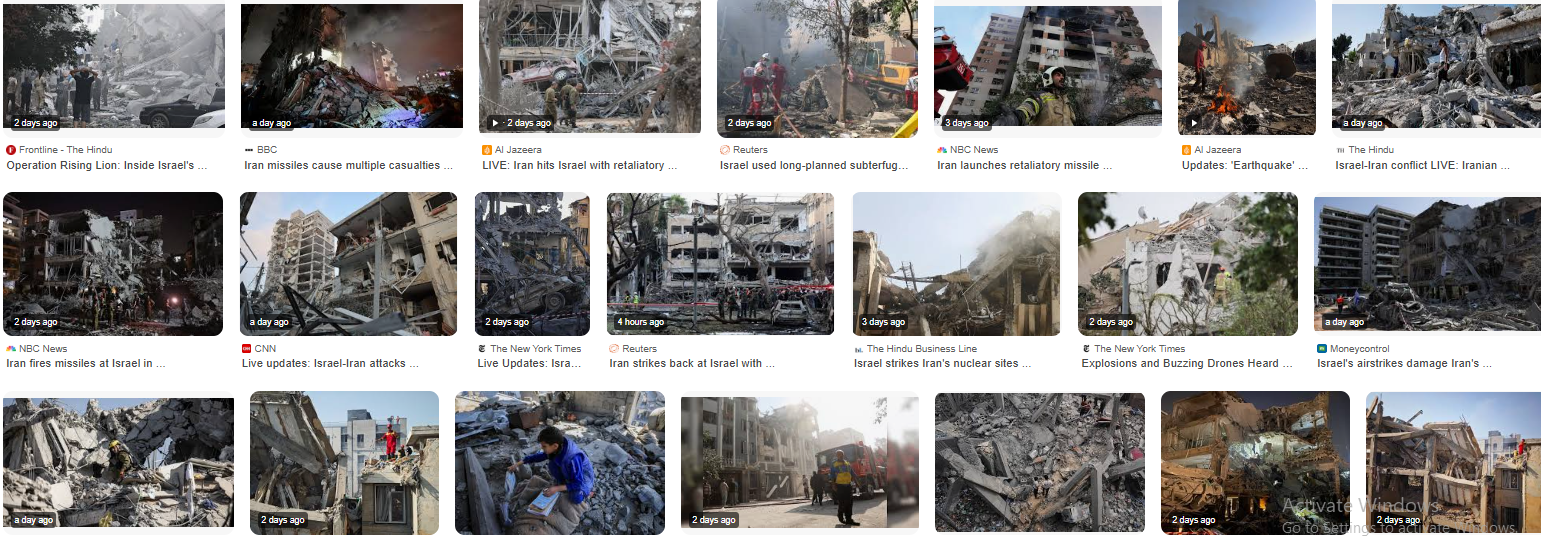

In a major escalation of the Israel-Iran conflict, powerful explosions were reported near Iran’s Fordow nuclear facility late Sunday, triggering a minor earthquake with a magnitude of 2.5. The blasts, which occurred approximately 20 kilometers from the city of Qom, were captured in widely shared videos posted by Iran International English, showing large fireballs and ground shaking.
The incident marks a significant moment in the ongoing confrontation, as Israel has now struck all three of Iran’s most critical nuclear facilities—Natanz, Isfahan, and Fordow—within just four days. The coordinated strikes represent a sharp intensification in hostilities, with both sides targeting high-value infrastructure, including nuclear and energy sites.
Fordow Blasts Cause Seismic Tremors
Seismological reports confirmed that the explosions near the Fordow uranium enrichment site caused noticeable ground tremors. The site, a heavily fortified underground facility built into a mountain near Qom, is designed to withstand aerial assaults.
The reported strikes at Fordow were forceful enough to trigger seismic activity, and the International Atomic Energy Agency (IAEA) later confirmed the attacks. Footage circulating on social media showed the aftermath, with blazing explosions lighting up the night sky and residents reportedly feeling the ground shake.
IAEA Verifies Israeli Strikes on Nuclear Sites
Rafael Grossi, Director General of the IAEA, confirmed to the United Nations Security Council that Israeli forces had struck three major Iranian nuclear installations—Fordow, Natanz, and Isfahan.
“At present, the Iranian authorities are informing us of attacks on two additional facilities: the Fordow fuel enrichment plant and the Isfahan complex, which includes a fuel plate fabrication plant, a fuel manufacturing plant, and a uranium conversion facility,” Grossi stated.
He added that Israel’s first strike on the Fordow site took place on Friday, signaling the start of what has now become the most intense direct confrontation between the two nations in decades.
As tensions mount, the international community continues to voice concern over the potential for a broader regional conflict.
