

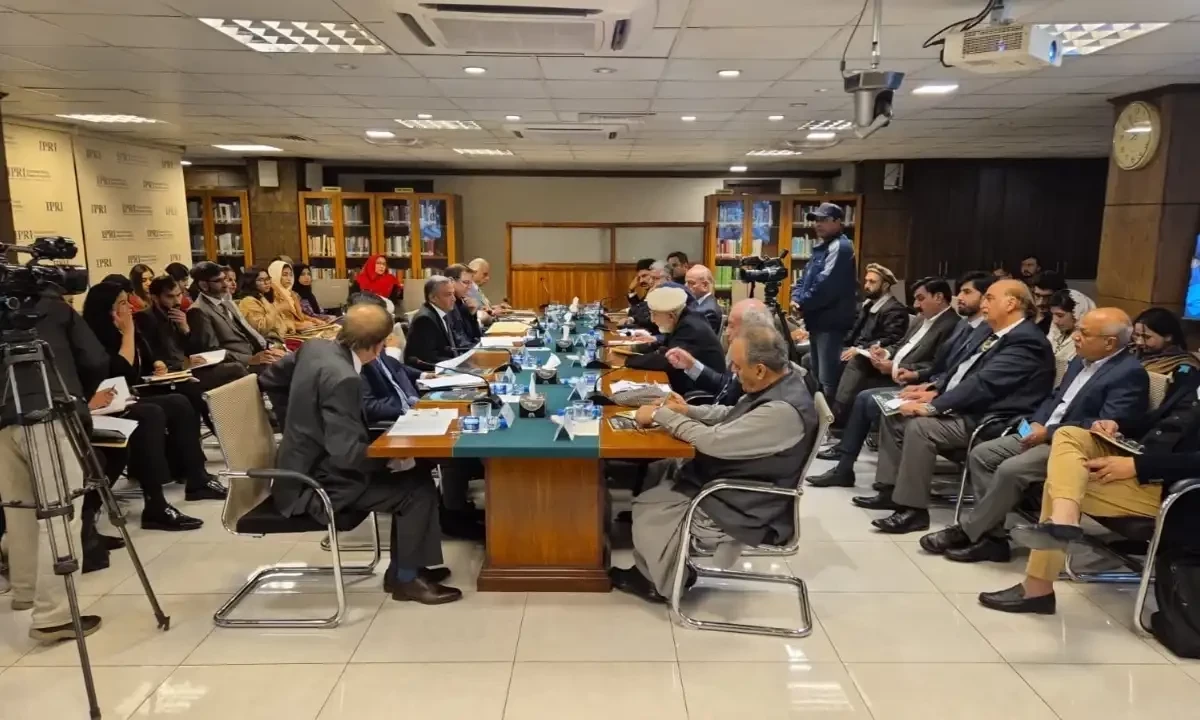

Experts and policymakers gathered at a roundtable organized by the Islamabad Policy Research Institute (IPRI) on Wednesday, where they highlighted the need for creating new provinces in Pakistan to improve governance, resource management, and public service delivery.
The discussion brought together a diverse group of participants, including politicians, bureaucrats, legal experts, and media representatives. Key speakers included Owais Ahmad Ghani, former governor of Khyber Pakhtunkhwa and Balochistan; Shakeel Durrani, Executive Director of SOPREST; Ishtiak Ahmad Khan, former federal secretary; Daniyal Aziz, former federal minister; Muhammad Hassan, former ambassador; Zubaida Jalal, former federal minister; Amb Asif Durrani, former special representative to Afghanistan; Hafiz Ahsan Ahmad, corporate and legal attorney; Dr Shoaib Suddle, eminent jurist; Murtaza Solangi, former caretaker minister; and Naveed Kashif, CEO of Dunya TV.
The experts agreed that Pakistan’s current administrative divisions, especially in larger provinces like Punjab, are too large to allow for efficient governance. Punjab, for example, is bigger than 196 countries. The speakers argued that this outdated administrative structure hampers effective governance, particularly as the country’s population continues to grow rapidly.
Several proposals were discussed, including the possibility of converting existing administrative divisions into full-fledged provinces or merging districts to form new ones. However, the discussion also highlighted the significant political resistance to such reforms. Many regional political elites and parties fear losing influence, which has hindered progress on the issue.
To address these challenges, participants suggested that Parliament take the lead by establishing a dedicated commission or parliamentary committee to consult with all stakeholders. They stressed the importance of building a national consensus on the issue through a structured approach involving media, intellectuals, and policymakers.
IPRI President Amb Dr. Raza Muhammad opened the session, with Dr. Raashid Wali Janjua, Director of Research at IPRI, moderating the discussion. Dr. Janjua outlined the economic, administrative, and political factors that make creating new provinces a necessary reform.
Speakers argued that breaking down large provinces into smaller administrative units would improve law and order, infrastructure development, and civic amenities. Former minister Daniyal Aziz emphasized that empowering local governments is essential for effective governance, although he warned that such changes would require constitutional amendments and could alter Pakistan’s federal structure.
Former bureaucrats Shakeel Durrani and Ishtiaq Ahmad suggested that the country’s current “Divisions” could be restructured into new provinces, offering a more manageable governance model. They highlighted the importance of fiscal and political devolution to strengthen local governments.
The discussion also referenced countries like Afghanistan, Indonesia, and Turkey, which have significantly more administrative units (34, 38, and 81 provinces, respectively), making a compelling case for Pakistan to consider similar reforms.
In conclusion, the roundtable emphasized the urgent need for reform in Pakistan’s governance structure. Experts called for bold steps toward administrative restructuring, asserting that the creation of new provinces could enhance political stability, economic efficiency, and overall governance.
