

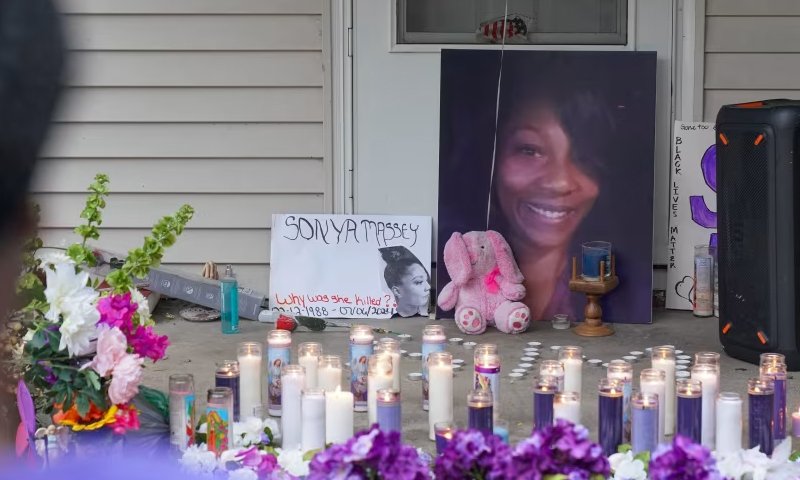

A former Illinois sheriff’s deputy was sentenced Thursday to 20 years in prison for fatally shooting Sonya Massey, a Springfield woman who had called 911 to report a potential prowler outside her home. The case, which sparked nationwide protests over police conduct and systemic racism, also prompted a U.S. Department of Justice inquiry.
Sean Grayson, 31, was convicted in October of police brutality in Massey’s death. The white former deputy received the maximum sentence allowed under the law and has remained in custody since being charged.
During the sentencing hearing, Grayson apologized, expressing regret for his actions and acknowledging the devastating impact on Massey’s family. “I made a lot of mistakes that night. There were points when I should’ve acted, and I didn’t. I froze,” he said. “I made terrible decisions that night. I’m sorry.” His attorney had requested a lighter sentence of six years, citing Grayson’s terminal colon cancer, which has spread to his liver and lungs.
Massey’s parents and two children, who had lobbied for the maximum penalty, described how the tragedy had permanently altered their lives. Her children spoke of growing up without their mother, while Massey’s mother, Donna Massey, shared the ongoing fear she experiences when interacting with law enforcement. “Today, I’m afraid to call the police in fear that I might end up like Sonya,” she said.
State’s Attorney John Milhiser, arguing for the maximum term, emphasized the preventable nature of Massey’s death. “Sonya Massey’s death rocked her family, but it rocked the community, it rocked the country,” Milhiser said. “We have to do whatever we can to ensure it never happens again.”
The courtroom erupted in cheers from Massey’s family when the judge read the sentence, prompting a warning from the bench to maintain decorum. Outside the courthouse, Massey’s relatives thanked the public for listening to their story and for the support they had received throughout the legal process. “Twenty years is not enough,” Massey’s daughter Summer told reporters.
Grayson’s attorneys had requested a new trial prior to the sentencing, which Judge Ryan Cadigan denied at the outset of the hearing.
The shooting of Sonya Massey highlighted longstanding concerns over police responses in domestic and public safety situations. Massey had called for help after noticing suspicious activity near her home, trusting that law enforcement would respond appropriately. Instead, the encounter ended in tragedy, igniting calls for reform and accountability.
As the sentence is carried out, Massey’s family hopes it will serve as a measure of justice and a deterrent against similar incidents in the future. Community members have expressed both relief and sorrow, acknowledging that while the conviction brings closure, it cannot undo the loss.
The case continues to resonate nationally, raising questions about police training, oversight, and the treatment of citizens who seek help in potentially dangerous situations. Advocates for reform have pointed to Massey’s death as a cautionary tale, urging law enforcement agencies to adopt stricter protocols and to prioritize civilian safety in all calls for service.
Thursday’s ruling marks a significant moment in the ongoing conversation about accountability for law enforcement officers, and the consequences of misconduct on both families and communities. While the tragedy of Sonya Massey’s death cannot be erased, the maximum sentence serves as a powerful statement that such actions will face the full weight of the law.
